Dangerous Neighborhoods in San Jose
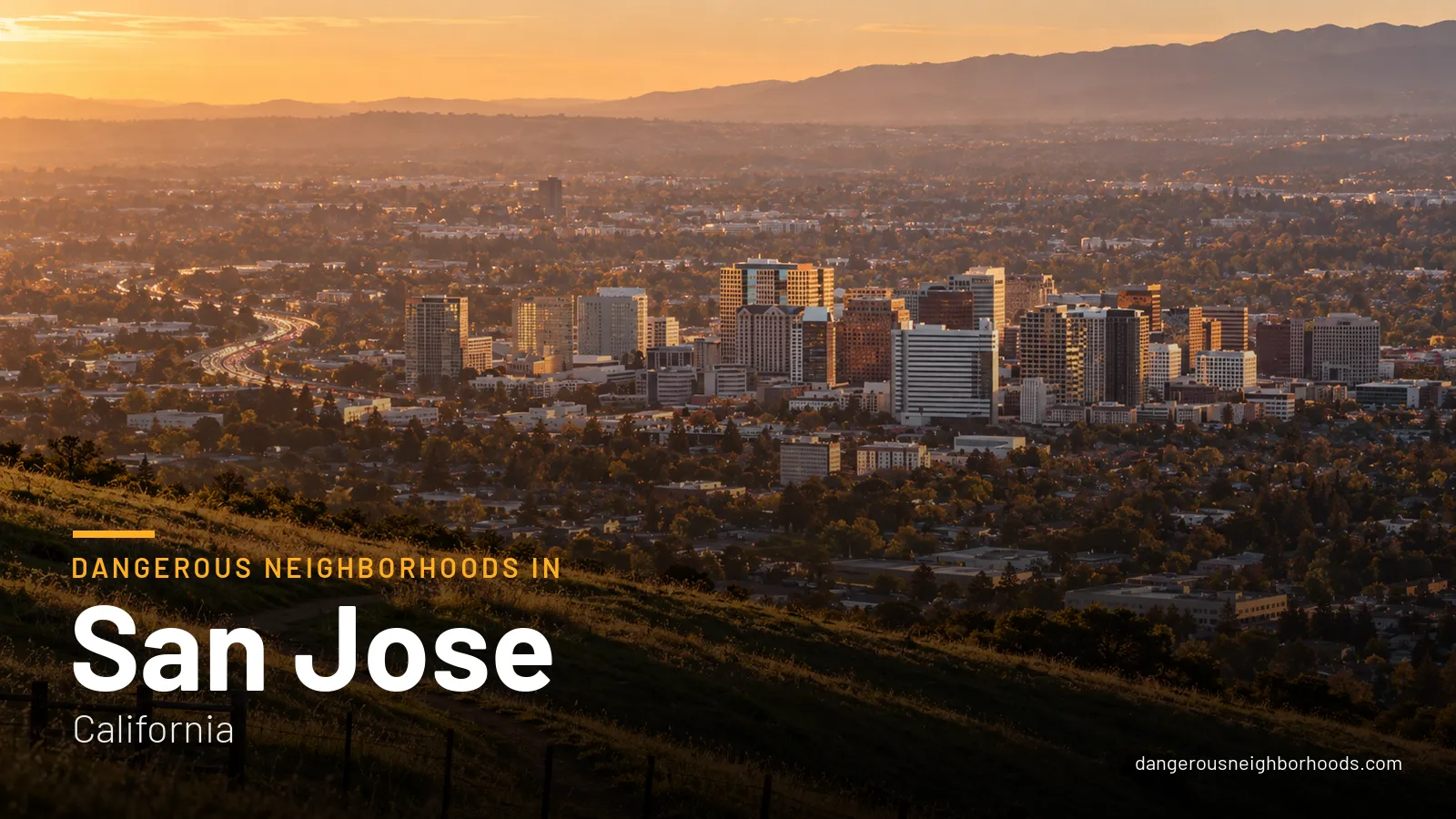
Searching for dangerous neighborhoods in San Jose usually brings up sweeping labels and confident rankings. The reality on the ground is more useful and more precise: San Jose has no official dangerous-neighborhood ranking, and risk shifts by block, business district, transit stop and time of day. A corridor that feels busy and ordinary at 2 p.m. can feel very different at 1 a.m. when shops close, parking lots empty and you are waiting alone for a ride.
This guide takes a micro-area approach. Instead of writing off entire communities, it looks at the specific streets, transit nodes, parking situations and hours where visitors most often run into trouble, and what you can do about it. The overall picture is calmer than many online threads suggest, but ordinary urban precautions still matter, especially around cars, luggage and late-night walks.
What the numbers actually say
According to 2025 citywide figures reported by NBC Bay Area using FBI-based data, San Jose recorded 4,963 violent crimes, a 15% drop from 2024 and down from 6,046 in 2023. Property crimes totaled 23,222, down 7%. The city counted 26 homicides, the same as in 2024 and reportedly the lowest in at least a decade. Motor-vehicle theft fell 17%.
Those figures are raw counts, not visitor-adjusted rates. A count tells you how many incidents were reported across a large city; it does not tell you how likely a visitor is to be affected on a given street at a given hour. San Jose is a big, spread-out city, so large totals are expected. What matters for travelers is where and when exposure concentrates: parked cars, crowded venues, transit waits and quiet late-night stretches.
For a more recent snapshot, SJPD's NIBRS data for January–May 2026 showed citywide totals of 360 robberies, 1,155 burglaries, 6,414 larceny/theft offenses and 1,866 motor-vehicle thefts. SJPD notes these figures are preliminary and subject to revision. The pattern is consistent with the annual data: theft and vehicle-related crime dominate far more than the violent incidents that tend to drive search queries.
- Larceny/theft is the big category: think phones, wallets, bags and items taken from cars.
- Vehicle theft remains significant even after the 2025 decline, so where and how you park matters.
- Robbery counts are far lower than theft counts, but late-night isolation raises personal risk.
- Counts are citywide and do not map neatly onto the blocks a visitor actually uses.
Which is the most dangerous neighborhood in San Jose?
The honest answer is that there is no definitive ranking, and anyone presenting one as fact is guessing. San Jose does not publish an official list of dangerous neighborhoods, and citywide counts cannot be converted into a fair neighborhood-by-neighborhood ranking without population, visitor volume and time-of-day context that simple lists ignore.
What you can say with confidence is that risk concentrates in specific situations rather than whole communities. For visitors, the recurring patterns are: theft in crowded nightlife and event zones, car break-ins and car theft in garages and lots, and higher personal risk on quiet, poorly lit stretches late at night, particularly when you are alone, carrying luggage or waiting for transport.
So instead of asking which neighborhood to avoid, a better question is which situations to manage. The micro-areas below are not a blacklist. They are places visitors commonly pass through, each with a distinct risk profile and specific, practical countermeasures.
Citywide crime at a glance
How San Jose compares as a whole
Official FBI figures for the entire city, not a single neighborhood: offenses per 100,000 residents in 2025, reported by the San Jose Police Department. Crime is concentrated in a few areas, so most of the city sits well below these averages.
Violent crime
505 per 100k
1.5× the US rate
-4% since 2022
Murder, rape, robbery and aggravated assault · 5,025 offenses in 2025
Property crime
2,404 per 100k
1.5× the US rate
-10% since 2022
Burglary, theft, vehicle theft and arson · 23,902 offenses in 2025
Source: FBI Crime Data Explorer. Dashed line: US average. No complete data for 2021. Police jurisdiction may not match city limits exactly. How we use this data
Micro-areas and corridors to understand
Where to take extra care
Circles show approximate areas, not exact borders. Tap a zone for details.
Downtown core: Santa Clara Street, First Street and San Pedro Square
Downtown is where many visitors spend their evenings, and it combines nightlife, hotels, parking garages and transit in a compact area. That mix is exactly what creates the main risks: phone and wallet theft in busy spots, car theft and break-ins in garages, and isolated late-night walks once bars and restaurants start emptying.
- Keep your phone in a front pocket or zipped bag when standing outside venues or at crosswalks.
- Choose a hotel within a short walk of where you plan to eat and drink so the walk back is brief.
- Leave nothing visible in your car, and don't move items to the trunk in view of others after parking.
- Walk on streets with open businesses and foot traffic rather than cutting through empty blocks or lots.
- Order your ride before you step outside late at night and wait indoors until it arrives.
Downtown is not a place to avoid; it is a place to navigate with awareness, particularly after closing time when the crowds that make it feel lively thin out quickly.
Diridon Station and the SAP Center approach
Diridon Station connects Caltrain and VTA, and it sits near the SAP Center, which means event crowds, parking pressure and big post-event flows. Crowds increase theft risk, and the moments right after an event ends, when everyone is heading to cars, trains or rideshare pickups at once, are when bags and phones are most exposed.
- Secure your bag with zippers closed and worn in front in dense crowds.
- Prearrange your pickup point before the event so you're not standing around scrolling your phone.
- Note where you parked and walk back with the crowd rather than lingering after it disperses.
- Check train times in advance so you aren't waiting alone on a platform late at night.
Mineta airport, Airport Boulevard and Coleman Avenue
The airport zone is vehicle-oriented and quieter outside peak times. It is not a nightlife area, and the main visitor risks are tied to cars and luggage: rental vehicles with bags in plain view, and confusion about where to meet a driver.
- Use official pickup zones for taxis and rideshares rather than accepting offers from people approaching you.
- Never leave luggage visible in a parked or rental car, even for a quick stop.
- Avoid walking along arterial roads with bags late at night when there is little foot traffic.
- Save the Airport Police number, 408-277-5400, before you land.
East San Jose: Alum Rock Avenue and Story Road
East San Jose often gets flattened into a single label online, which is unfair and unhelpful. Alum Rock Avenue and Story Road are large, diverse commercial corridors with plenty of everyday activity. They do not warrant a blanket danger label.
The practical advice here is the same as along any big commercial strip: use ordinary precautions at bus stops, parking lots and late-night businesses. Park in well-lit spaces, keep valuables out of sight, and be more attentive when businesses are closing and lots empty out. If you're visiting for food or shopping, daytime and early evening visits naturally come with more people around.
South San Jose: Monterey Road, Capitol Expressway and Tamien connections
South San Jose is defined by long arterial roads, and that shapes the risk profile. Monterey Road and Capitol Expressway include stretches with low foot traffic, wide crossings and isolated parking. Tamien is a transit connection point, which means waits for trains and buses.
- Avoid walking long distances late, especially with luggage, on arterial stretches with few pedestrians.
- Use marked crossings on wide, fast roads rather than cutting across mid-block.
- Choose lit parking close to the entrance rather than the far corner of a large lot.
- Time your transit connection so you aren't waiting alone for long at night.
Why nights feel different
Most late-night risk in San Jose comes down to a few conditions: reduced foot traffic, closed businesses, dark parking areas and waits for transport. None of these is unique to one neighborhood. A block that is perfectly comfortable at dinner time can feel exposed at 1 a.m. simply because nobody is around.
The other side of the equation is that crowds and events increase theft. Busy nights bring pickpocketing and snatch-and-run phone theft; empty nights bring isolation. The sensible approach is to match your precautions to the moment: guard your belongings in crowds, and minimize solo walking when streets go quiet.
- Plan the return trip before you go out, not at the end of the night.
- Stay with your group until everyone's ride has arrived.
- Wait inside a venue, hotel lobby or station building rather than on an empty curb.
- Keep your phone charged so you can call a ride or emergency services without delay.
Parking and rental car guidance
Given the citywide numbers on larceny/theft and motor-vehicle theft, your car is often your biggest exposure as a visitor. Break-ins are frequently crimes of opportunity, and a visible bag, laptop sleeve or even a charging cable can be enough of a trigger.
- Remove all items from rental cars, not just valuables. An empty car is the least attractive target.
- Load the trunk before you arrive, not in the parking space where others can see.
- Prefer staffed or well-lit garages over dark, isolated lots, particularly overnight.
- Park near entrances and exits with people coming and going.
- Lock the car and close windows every time, even for very short stops.
- Take luggage into the hotel rather than leaving it in the car between check-out and a flight.
If you're only in town for a short trip based downtown or near the airport, it's worth considering whether you need a car at all. Transit, taxis and rideshares can cover a lot, and fewer hours parked means fewer chances for a break-in.
Getting around on transit
The region is served by VTA buses and light rail, Caltrain, BART connections, taxis and rideshares. For most visitors, transit is a practical option, and the main risks are the same as in any city: distraction, crowded platforms and long waits at quiet stops late at night.
- Check schedules before heading out so you know when the last convenient connection leaves.
- Stand near other passengers or in well-lit areas of platforms and stops.
- Keep headphones low and phone use brief while waiting at night.
- Switch to a taxi or rideshare if a late connection means a long wait alone.
- Hold bags on your lap or between your feet on busy trains and buses.
Diridon Station and Tamien are the two named connection points in this guide where timing matters most: busy and crowded around events, quieter and more exposed late at night.
Sensible places to base yourself
Where you stay shapes how much late-night walking and parking you'll need. The options below are convenience suggestions, not safety rankings. Within any area, the exact hotel block and how far you'll walk after dark matter more than the name of the district.
- Downtown convention and San Pedro area: walkable to restaurants and nightlife, handy for transit. Pick a hotel close to where you'll spend evenings.
- Japantown: a smaller, neighborhood-scale base that can suit travelers who want a quieter feel near the center.
- Airport hotel cluster: practical for early flights and short stays. It's quieter outside peak times, so plan transport rather than walking.
- Santana Row and Westfield Valley Fair: shopping and dining on your doorstep, convenient if you prefer a self-contained base.
Before booking, check the walking route from the hotel to the places you actually plan to go, and whether the hotel has secure parking if you're driving. A short, busy walk back is worth more than a nominally quieter address that leaves you crossing empty lots at night.
Emergencies and useful numbers
Save these numbers before you arrive. In any situation involving immediate danger, a crime in progress or a medical emergency, call 911.
- Emergency: 911 for immediate danger, crimes in progress, fires and medical emergencies.
- Cellular emergency line: 408-277-8911, listed by the city for emergency calls from mobile phones.
- SJPD non-emergency: 408-277-8900 for reporting situations that don't need an immediate response.
- City services: 311 for non-police city issues.
- Airport Police: 408-277-5400 for incidents at or around Mineta San Jose airport.
If your car is broken into or something is stolen and nobody is in danger, use the non-emergency line rather than 911. Keep a note of your rental agreement details and a photo of your ID stored separately from your wallet, which makes reporting and replacement much easier.
A quick visitor checklist
- Think in blocks and hours, not whole neighborhoods.
- Empty the car completely every time you park.
- Guard phones and bags in crowds, at events and on transit.
- Prearrange late-night rides and wait indoors.
- Avoid long solo walks late on quiet arterial roads, especially with luggage.
- Use official airport pickup zones and never leave bags in view.
- Save emergency numbers before you need them.
Frequently asked questions
Is San Jose safe for tourists?
Most visits are uneventful when you take ordinary urban precautions. 2025 citywide counts showed violent crime down 15% and property crime down 7% from 2024, though those are raw counts rather than visitor-adjusted rates. The most relevant risks for visitors are theft and vehicle-related crime, so protecting your belongings and car goes a long way.
Which areas of San Jose should I avoid?
There is no official list of areas to avoid, and blanket labels are misleading. Instead, be more careful in specific situations: crowded nightlife and event zones where theft is common, dark or isolated parking, and quiet arterial stretches late at night. Downtown, the Diridon/SAP Center approach, the airport zone and long corridors in East and South San Jose each have their own patterns described above.
Is downtown San Jose safe at night?
Downtown can be comfortable in the evening when restaurants and venues are busy, but risk rises after closing time when foot traffic drops. Keep walks back to your hotel short, stay on active streets, order rides before stepping outside and watch for phone and wallet theft around busy spots.
Are car break-ins common in San Jose?
Vehicle-related crime is a real concern. Motor-vehicle theft fell 17% in 2025, but SJPD's preliminary January–May 2026 data still showed 1,866 motor-vehicle thefts and 6,414 larceny/theft offenses citywide. Remove everything from your car, including rentals, and prefer well-lit, busy parking.
Is it safe to use VTA light rail and Caltrain at night?
Transit is a practical option, with VTA buses and light rail, Caltrain and BART connections serving the region. Late at night, the main issue is waiting alone at quiet stops. Check schedules ahead, stand in lit areas near other passengers, and switch to a taxi or rideshare if a connection means a long solo wait.
Is East San Jose dangerous?
East San Jose should not be treated as a single danger zone. Corridors like Alum Rock Avenue and Story Road are large, diverse commercial areas. Use ordinary precautions at bus stops, parking lots and late-night businesses, as you would along any big commercial strip.
Where should I stay in San Jose as a first-time visitor?
Convenient bases include specific hotel blocks in the downtown convention/San Pedro area, Japantown, the airport hotel cluster and the Santana Row/Westfield Valley Fair area. These are convenience suggestions rather than safety rankings; check the walking route from your hotel to where you'll spend evenings.
What number do I call for a non-emergency in San Jose?
Call SJPD's non-emergency line at 408-277-8900 for incidents that don't need an immediate response, such as a car break-in discovered after the fact. Use 911 for any emergency, 311 for city services and 408-277-5400 for Airport Police.
The bottom line: San Jose's danger is situational, not neighborhood-wide. Recent citywide numbers point in a better direction, but theft and vehicle crime remain the most likely problems for visitors. Stay close to where you spend your evenings, keep your car empty, plan your late-night rides and transit connections, and you'll sidestep most of the risks that the "dangerous neighborhoods" label is really trying to describe.
This guide is general safety information, not a guarantee of safety. Conditions change; check local news and official sources before you go. In an emergency, call 911.
Nearby city guides


More city guides in California
 Los Angeles
 San Diego
 San Francisco
 Fresno
 Sacramento
 Long Beach
 Oakland
 Anaheim