Dangerous Neighborhoods in Denver
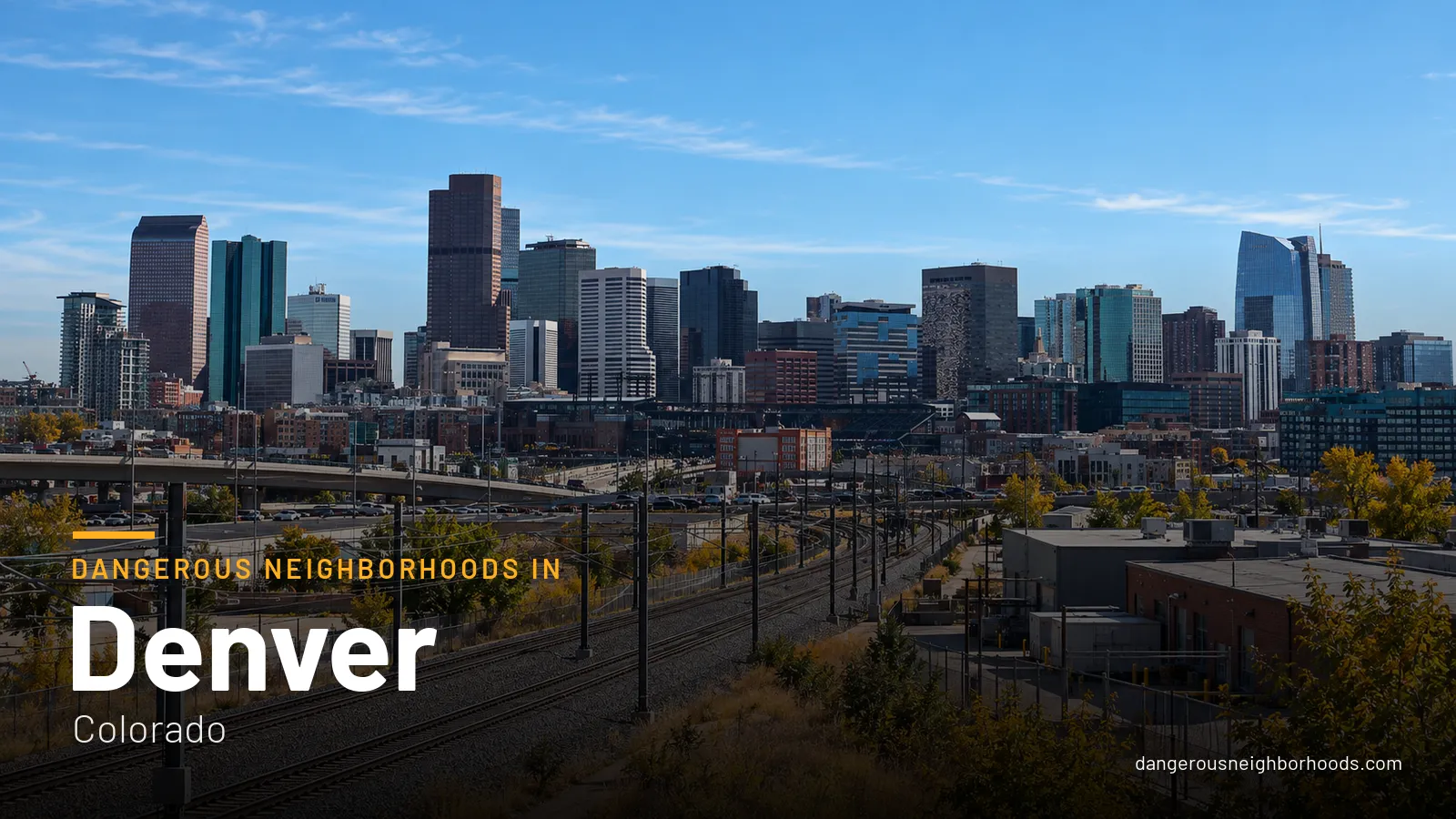
Denver is not a city of "no-go" neighborhoods. It is a city of specific corridors, transit nodes and late-night blocks where the mix of crowds, alcohol, parked cars and empty stretches changes the risk. Most visitors who run into trouble here are dealing with a smashed car window, a stolen phone or an uncomfortable encounter, not violent crime. The useful question is not "which neighborhood should I avoid?" but which blocks, at which hours, and for what kind of risk.
This guide works through those micro-areas the way a local would explain them to a friend. It uses 2025 figures published by the Denver Post's crime database, which draws on Denver Police Department (DPD) data, and it separates raw counts from per-resident rates, because confusing the two is the most common mistake in Denver safety rankings.
How to read Denver crime numbers without being misled
DPD publishes reported crime by statistical neighborhood, police district and incident location. Its NIBRS data are updated on weekdays, carry a processing lag of roughly two days, and can change as reports are added, corrected or removed. A neighborhood total is a screening signal, not a forecast for every block in it.
Rates per 1,000 residents distort busy downtown areas. A district where few people live but tens of thousands work, shop, commute or fly through will post a high per-resident rate even if the risk to any one visitor is modest. Denver International Airport is the clearest example: it appears near the top of the 2025 violent-crime rate list with 32.49 per 1,000 residents, from just 40 incidents, because almost nobody lives there.
Raw counts tell you where incidents cluster, not how likely you are to be affected. Union Station recorded more violent incidents in 2025 (147) than Civic Center (86), yet Civic Center has the higher rate. Both numbers matter, but neither is a verdict on the people who live nearby. Treat them as clues about where to pay attention.
- Civic Center: 48.62 violent crimes per 1,000 residents, 86 incidents (2025).
- DIA: 32.49 per 1,000 residents, 40 incidents.
- Union Station: 29.04 per 1,000 residents, 147 incidents.
- Central Business District (CBD): 24.45 per 1,000 residents, 99 incidents.
- Sun Valley: 22.25 per 1,000 residents, 32 incidents.
- Five Points: 17.4 per 1,000 residents.
Notice the pattern: the top of the list is dominated by downtown, transit and airport areas with small resident populations and huge daytime flows. That is exactly why the rest of this guide focuses on corridors and times rather than labels.
Which is the most dangerous neighborhood in Denver?
There is no honest, definitive answer to this question. If you rank by violent-crime rate per resident using 2025 figures, Civic Center comes out first. If you rank by raw violent incidents, downtown transit and commercial areas such as Union Station stand out. If you rank by car break-ins or property crime, a different set of streets would lead. Each method answers a different question.
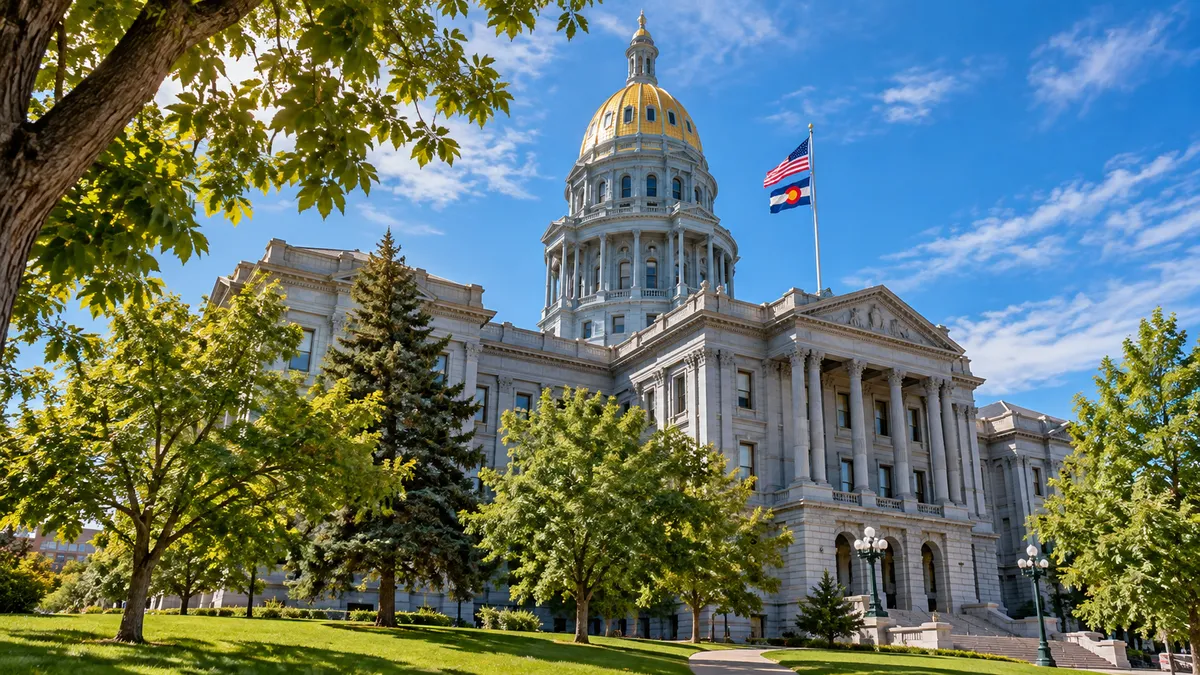
Civic Center's position deserves context. The area around Civic Center Park sits between the State Capitol, government buildings, museums and the Colfax–Broadway intersection. It draws large daytime crowds, protests, festivals and people with nowhere else to go, while very few residents live in the statistical neighborhood. That combination inflates the per-resident rate and concentrates incidents around a few public spaces rather than spreading them across residential streets.
The practical answer for a visitor: Denver's higher-risk pockets are mostly public spaces and transit nodes at night, plus poorly lit industrial side streets and event-night parking areas. Ranking whole communities as "dangerous" would be misleading and unfair to the many residents of those areas who live ordinary, safe lives.
Citywide crime at a glance
How Denver compares as a whole
Official FBI figures for the entire city, not a single neighborhood: offenses per 100,000 residents in 2025, reported by the Denver Police Department. Crime is concentrated in a few areas, so most of the city sits well below these averages.
Violent crime
882 per 100k
2.7× the US rate
-6% since 2021
Murder, rape, robbery and aggravated assault · 6,469 offenses in 2025
Property crime
4,144 per 100k
2.7× the US rate
-29% since 2021
Burglary, theft, vehicle theft and arson · 30,381 offenses in 2025
Source: FBI Crime Data Explorer. Dashed line: US average. Police jurisdiction may not match city limits exactly. How we use this data
Micro-areas and corridors worth understanding
Where to take extra care
Circles show approximate areas, not exact borders. Tap a zone for details.
Civic Center Park and the Colfax–Broadway junction
By day, this is one of Denver's cultural cores: the Capitol, the Denver Art Museum, the central library and the Golden Triangle are all within a few blocks. Visitors walk through constantly without incident. The mood shifts after dark and on quiet weekday evenings, when the park empties of office workers and tourists.
- Main risks: phone snatching, aggressive panhandling, visible drug use and occasional disputes in and around the park.
- Best practice: cross the park during daylight or events; at night, walk along the lit, busier edges instead of cutting through the middle.
- Transit tip: if you are waiting for a bus near Colfax and Broadway late, stand where there is foot traffic and keep your phone away between checks.
Union Station and the downtown transit hub
Union Station is a beautifully restored landmark, a hotel, a food hall and the terminus of the airport train. It also recorded 147 violent incidents in 2025, the highest raw count among the neighborhoods listed above. Both facts are true at once: huge numbers of people pass through, and incidents cluster where people wait, transfer and linger.
- Daytime and early evening: the main hall, plaza and platforms are busy and generally comfortable.
- Late night: the underground bus concourse and quieter access passages feel very different; use the busiest route between platforms and street level.
- Arriving from DIA late: have your onward route planned before you step off the train, and head straight to a taxi, rideshare pickup or your hotel entrance.
The Central Business District and the 16th Street corridor
The CBD is office towers, hotels and the long pedestrian spine of 16th Street. Its 2025 figures (99 violent incidents, 24.45 per 1,000 residents) reflect a district with many workers and visitors but relatively few residents. Office hours feel busy and ordinary.
The risk window opens when offices close and before nightlife peaks. Some blocks empty quickly on weekday evenings, and that is when uncomfortable encounters and opportunistic theft are more likely. Stick to blocks with open restaurants and hotel lobbies, and avoid lingering in empty side alleys or parking-garage stairwells.
RiNo's industrial side streets and event-night edges
RiNo (the River North Art District) is a mixed arts, restaurant, brewery and warehouse district, not a uniform residential neighborhood. The main visitor streets are lively, murals draw photographers all day, and weekend evenings are busy. The concern lies at the edges.
- Vehicle break-ins and theft from parked cars are the main visitor risk, especially on quieter side streets.
- Impaired or aggressive behavior can appear around nightlife at closing time.
- Empty industrial stretches between venues are poorly suited to walking alone late at night.
The fix is simple: park on busier, well-lit streets or in staffed lots, leave nothing visible in the car, and take a rideshare between venues if the walk crosses dark warehouse blocks.
Five Points and the Welton Street area at night
Five Points is one of Denver's most historic neighborhoods, with deep roots in the city's Black jazz and cultural history, and it is home to many long-standing residents, restaurants and venues. Its 2025 violent-crime rate was 17.4 per 1,000 residents, lower than the downtown entries above.
Visitor precautions here are about nightlife, not the neighborhood itself. Late-night crowds, alcohol and quieter blocks near transit stops or service access points are where friction tends to show up. Travel with company late, choose a direct and well-lit route, and do not wander side streets looking for your car after closing.
Sun Valley and stadium-day parking
Sun Valley is a small neighborhood west of downtown, next to the stadium where the Broncos play. Its 2025 rate (22.25 per 1,000 residents from 32 incidents) shows how a small population turns a modest count into a high rate. Most visitors only pass through on game or concert days.
Game days bring their own risks: crowded informal parking, cars left for hours, tailgating and alcohol. Use official or staffed lots, lock valuables out of sight before you arrive rather than in the lot, and leave with the crowd rather than after the area has emptied.
Denver International Airport
DIA's high rate is mainly a statistical artifact of having almost no residents. For travelers, the real issues are ordinary airport ones: unattended bags, distraction theft at curbs and rideshare zones, and car break-ins in long-term parking. Keep bags within reach and use only the official taxi and rideshare pickup areas.
Practical visitor risks in Denver
Car break-ins are the risk most visitors actually meet. Rental cars are easy to spot, and trailheads, brewery districts, stadium lots and hotel street parking all see smash-and-grab theft. The single most effective habit is to leave the car completely empty: no bags, chargers, coats or shopping, even in the trunk if you are loading it in view of others.
- Phone and bag snatching: most common at transit stops and busy corners; keep phones out of hand when you are not using them.
- Aggressive panhandling: usually verbal; a calm "no, sorry" and continuing to walk is enough in almost every case.
- Public drug use: visible in some downtown public spaces; it is unsettling but rarely directed at passersby.
- Late-night disputes: concentrated around bar closing time; avoid getting drawn into arguments.
Do not forget the non-crime risks. Denver sits at about a mile above sea level, so alcohol hits harder, dehydration comes faster and the sun is stronger than many visitors expect. Weather can also change quickly, especially if you head into the foothills. These cause far more visitor problems than crime does.
Late-night and parking guidance
The hours that matter most are roughly from late evening until bars close, and the empty stretch after closing. Downtown and nightlife areas feel very different at 7 p.m. and at 1:30 a.m. Plan your return trip before you go out, not when you are ready to leave.
- Walk on lit, busy streets even if it adds a few minutes.
- Use rideshare between venues when the route crosses empty industrial or office blocks.
- Wait for your ride inside a bar, restaurant or hotel lobby, and check the plate before getting in.
- Stay with your group at closing time; splitting up is when people end up walking dark blocks alone.
For parking, choose visibility over convenience. A staffed garage or a lot with lights and attendants beats a free spot on a quiet side street. If your hotel offers valet or secure parking, it is often worth the cost compared with the hassle of a broken window and a stolen bag.
Getting around on RTD transit
RTD runs Denver's buses and light rail, plus the train line between Union Station and the airport. It has its own Transit Police and publishes rider and driver safety information, including dashboards and personal security guidance, on its website. For most visitors, daytime transit is practical and uneventful.
- Sit near the operator or in busier cars late at night.
- Know your stop so you are not standing on a quiet platform studying a map.
- Report concerns through RTD's official channels listed on its safety pages, or call 911 in an emergency.
- Avoid long waits at empty stations after dark; a rideshare for the last leg is often the smarter choice.
The busiest nodes, Union Station and Civic Center, are also where incidents cluster. That is not a reason to avoid them, just a reason to move through them with purpose, especially at night.
Sensible accommodation bases
There is no officially "safest" neighborhood in Denver, and any list claiming one is guessing. What makes a base feel easy is steady foot traffic, good lighting, short rides to where you want to go and secure parking. Several areas meet those criteria for different kinds of trips.
- LoDo near Union Station: walkable to restaurants and the ballpark, with a direct train to the airport; be more deliberate around the transit hub late at night.
- Cherry Creek: shopping, restaurants and hotels in a calmer setting, a short ride from downtown.
- Highlands (LoHi): restaurants and views across the river from downtown, with a neighborhood feel.
- Washington Park area: residential and leafy, good for longer stays and runners, less convenient for nightlife.
- Golden Triangle: ideal for museums; plan evening routes that avoid cutting through Civic Center Park after dark.
Whichever base you choose, the hotel's details matter more than the ZIP code: a staffed front desk, secure parking and a well-lit entrance do more for your peace of mind than neighborhood reputation.
Emergencies and who to call
Call 911 for any emergency: a crime in progress, a medical crisis, a fire or anyone in immediate danger. Denver's 911 service is run by the city's Department of Public Safety.
- Denver Police non-emergency line: 720-913-2000, for reporting a car break-in or theft after the fact.
- Denver 311: for city services and non-urgent issues.
- Police headquarters: 1331 Cherokee St, Denver, CO 80204.
- Denver Health Medical Center: the city's main trauma hospital, near downtown.
If your car is broken into, photograph the damage, file a report (you will likely need it for the rental company and insurance) and do not leave anything else in the vehicle while you sort it out.
A quick safety checklist
- Empty the car every time you park it.
- Plan the ride home before going out.
- Cross public squares in daylight and use lit edges at night.
- Move through transit hubs with purpose after dark.
- Drink water and pace alcohol at altitude.
- Check official DPD data if you want current numbers, remembering the reporting lag.
Frequently asked questions
Is Denver safe for tourists?
Yes, for the vast majority of visitors. The most common problems are car break-ins, phone theft and uncomfortable encounters in a few public spaces at night. Sensible habits around parking, late-night routes and transit hubs prevent most of them.
Why does Civic Center have such a high crime rate?
Because the rate is calculated per resident, and Civic Center has few residents but very large numbers of visitors, workers and people spending time in its public spaces. Its 2025 figure was 48.62 violent crimes per 1,000 residents from 86 incidents.
Is Union Station safe at night?
It is busy and usable, but deserves attention late at night. It had the highest raw count of violent incidents among the neighborhoods above in 2025. Use the main hall and busiest routes, avoid lingering in quiet passages, and plan onward travel before arriving.
Is RiNo safe to visit?
Yes, the main streets are lively and popular. The key risks are theft from parked cars and walking alone through empty industrial side streets late at night. Park on busy streets and take a rideshare between distant venues.
Is it safe to ride the light rail and the airport train?
Generally yes, especially during the day. At night, sit near the operator or in busier cars, avoid long waits at empty platforms and use RTD's official channels or 911 to report problems.
Where should I park in Denver to avoid break-ins?
Staffed, well-lit garages or hotel parking are the best options. Wherever you park, leave nothing visible and avoid loading valuables into the trunk in view of others.
Are Denver crime maps up to date?
They are close to current but not real-time. DPD data update on weekdays with roughly a two-day lag and can be revised as reports change, so use them to understand patterns rather than to judge a single block.
Denver rewards visitors who think in blocks and hours rather than labels. Enjoy the museums by day, the breweries and restaurants in the evening and the mountains on the horizon, while keeping your car empty, your routes lit and your late-night plans settled in advance. That approach deals with almost every real risk the city presents.
This guide is general safety information, not a guarantee of safety. Conditions change; check local news and official sources before you go. In an emergency, call 911.
Nearby city guides
More city guides in Colorado
 Colorado Springs
 Arvada
 Aurora
 Boulder
 Centennial
 Fort Collins
 Greeley
 Lakewood