Dangerous Neighborhoods in Jacksonville
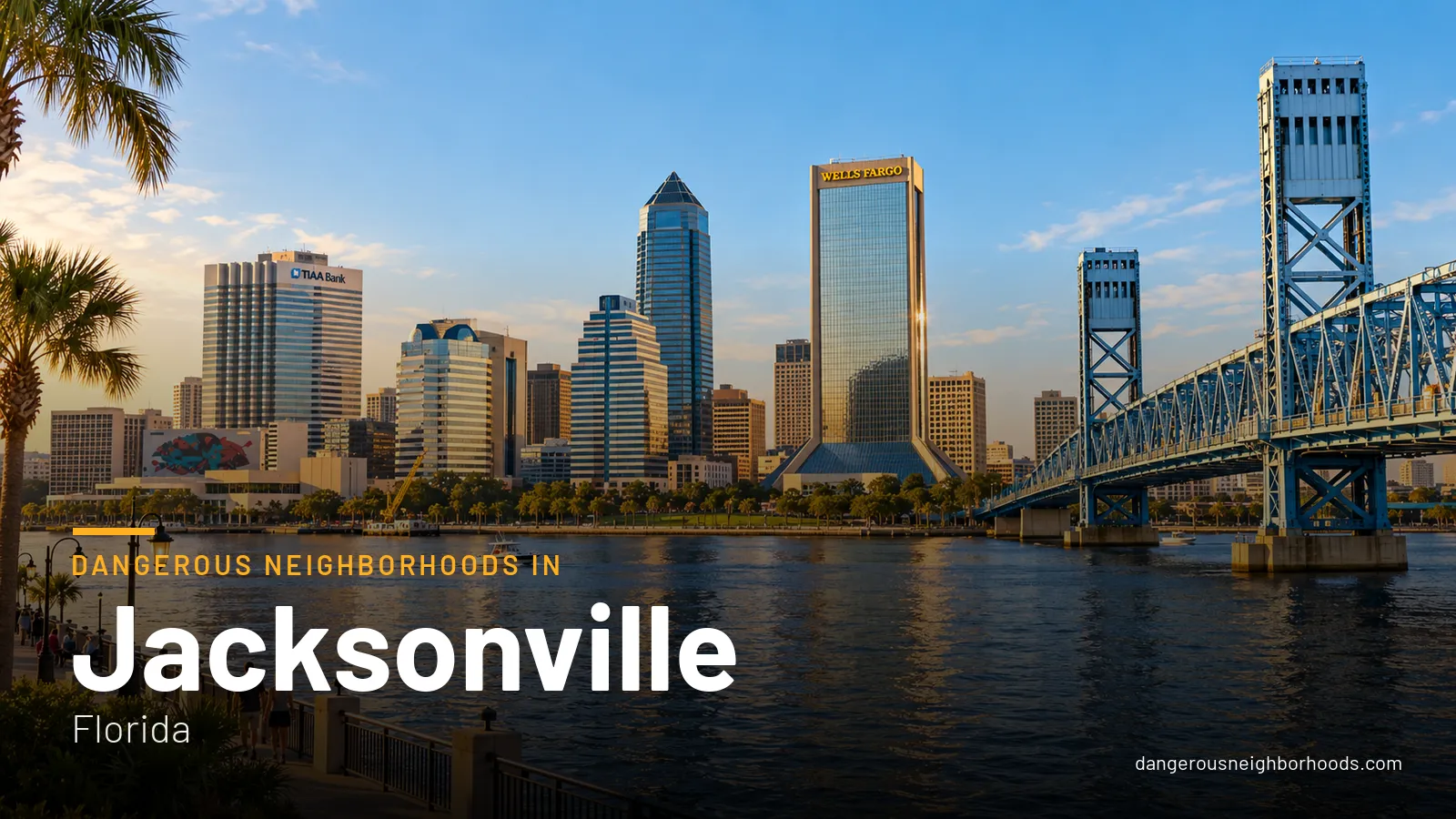
Jacksonville does not have one "dangerous neighborhood" that you can circle on a map and avoid. It is one of the most spread-out cities in the United States, and for visitors the real risks cluster in specific corridors, interchanges, parking walks and late-night time windows rather than across whole communities. A calm, block-by-block approach will serve you far better than a list of names to fear.
This guide uses official city and Jacksonville Sheriff's Office (JSO) briefings, transportation-safety planning and clearly labeled older traveler guidance. Where a source is dated or limited to one district, it is flagged. Nothing here is a ranking, because no reliable, current, visitor-focused ranking of Jacksonville neighborhoods exists in the verified record.
How to read crime numbers in Jacksonville
The City of Jacksonville public-safety dashboard is the current official reference point for crime data. Before you draw conclusions from it, or from any headline, it helps to understand what different kinds of numbers actually tell you.
- Raw counts tell you how many incidents were recorded in an area. Large or busy districts naturally produce more incidents, so a high count does not automatically mean a high personal risk.
- Rates adjust for population, which makes comparisons fairer, but residential population says little about areas full of commuters, event crowds and visitors.
- Percentage changes describe a trend over a period. They show direction, not the absolute level of risk.
- Briefing periods are often a single month or quarter. Short windows can swing sharply, so treat them as snapshots rather than verdicts.
What recent briefings actually say
Recent JSO and city briefings give a useful but narrow picture. In a District 4 briefing covering January to March 2026, officials reported that citywide violent crime and crimes against persons were down 4%, residential and business burglaries were down 40%, and auto theft was down 36%. The same briefing reported that District 4's violent-crime rate fell 17%.
A separate Southwest briefing for January 2026 reported total crime down 31%, while some robbery and abduction categories rose. That mixed result is a good reminder that an overall decline can hide category-specific increases.
These figures are district or briefing-period percentages. They are not citywide annual rates and they are not visitor rankings. They suggest the broader trend in early 2026 was improving in several categories, but they cannot tell you which street is safe tonight.
Which is the most dangerous neighborhood in Jacksonville?
The honest answer is that there is no verified, current ranking that names a single most dangerous neighborhood in Jacksonville, and anyone who hands you one with confidence is guessing or repackaging old data. The official dashboard and district briefings report trends by district and category, not a visitor-danger league table.
What the verified record does show is a set of micro-areas and corridors where specific risks concentrate. For a visitor, the most relevant concerns are:
- Traffic and pedestrian danger on high-speed corridors such as Westside Normandy Boulevard and the I-295 perimeter.
- Quiet-hour exposure in the Downtown Urban Core after events end and businesses close.
- Late-night crowd and parking risks on the Atlantic Boulevard club and entertainment strip.
- Vehicle theft and break-ins in parking areas, especially where valuables are left visible.
Older traveler guidance from 2017 flagged the area northwest of downtown around MLK Jr Parkway and Kings Road for street-level drug activity and robbery. That is dated context, not a current ranking, and it should not be read as a description of everyone who lives there today.
If you want a practical answer, reframe the question: "Which situations in Jacksonville carry the most risk for me?" For most visitors, those are walking along fast roads without crossings, making long walks to remote parking after dark, and lingering alone around nightlife late at night.
Citywide crime at a glance
How Jacksonville compares as a whole
Official FBI figures for the entire city, not a single neighborhood: offenses per 100,000 residents in 2025, reported by the Jacksonville Sheriff's Office. Crime is concentrated in a few areas, so most of the city sits well below these averages.
Violent crime
519 per 100k
1.6× the US rate
-26% since 2021
Murder, rape, robbery and aggravated assault · 5,239 offenses in 2025
Property crime
2,173 per 100k
1.4× the US rate
-17% since 2021
Burglary, theft, vehicle theft and arson · 21,927 offenses in 2025
Source: FBI Crime Data Explorer. Dashed line: US average. Police jurisdiction may not match city limits exactly. How we use this data
Micro-areas and corridors to understand
The areas below are described by what happens there and when, not by reputation. Use them to adjust your timing and routes, not to write off entire parts of the city.
Where to take extra care
Circles show approximate areas, not exact borders. Tap a zone for details.
Downtown Urban Core: busy on event days, quiet between them
Downtown's parks, convention spaces, stadium approaches and nightlife streets can feel lively during events and noticeably empty afterward. The main issue is not a specific block but the contrast between crowded and deserted hours.
- Stick to active streets with open businesses, lighting and other pedestrians, especially after dark.
- Avoid long walks to remote parking once businesses close or an event crowd disperses.
- Leave with the crowd rather than lingering as the area empties out.
- Plan your exit before you arrive, including where you parked and which transit option you will use.
Northwest of downtown: MLK Jr Parkway and Kings Road
This area appears in 2017 traveler guidance that mentioned street-level drug activity and robbery. Almost a decade later, that note should be treated as historical context only, not evidence of present conditions.
For visitors, the practical point is simple: this is not a typical tourist area, so most people have little reason to walk it at night. If your route passes through, drive rather than walk after dark, keep doors locked, and do not stop to engage with anyone on the street.
Westside Normandy Boulevard: Lane, Cassat, Hammond and I-295
The stretch of Normandy Boulevard around Lane, Cassat, Hammond and the I-295 area carries serious traffic and pedestrian-safety concerns, including crash reporting. A 2024 shooting investigation in the area has also been reported.
- Use marked crossings only, even if it means a longer walk.
- Never walk along high-speed shoulders, particularly near the I-295 ramps.
- Treat it as a driving corridor, not a strolling street, especially at night.
- Keep stops brief at gas stations and lots, and stay aware of the vehicles around you.
I-295 and the former 9A perimeter
The I-295 perimeter, including the former 9A section, and its interchanges appear on the city's Vision Zero High Injury Network. The risks here are collisions, confusing lanes, breakdowns and vehicle theft.
That designation is about road danger, not neighborhood character. It does not prove that the areas next to the highway are dangerous. It does mean you should plan lane changes early, avoid last-second exits and know what to do if your vehicle breaks down.
Atlantic Boulevard late-night club strip
The club and entertainment strip along Atlantic Boulevard is where late-night choices matter most. The risk increases after midnight, when crowds thin, people have been drinking and parking lots become isolated.
- Book a rideshare or use a designated driver; do not drive after drinking.
- Stay with your companions and agree on a meeting point before you go in.
- Avoid isolated parking walks, and do not wander to a distant lot alone.
- Wait for rides in lit, visible spots near the venue entrance.
Downtown transit and parking transfers after events
After games, concerts and conventions, downtown fills with people moving between venues, parking and transit. This transfer window is when visitors are most likely to be tired, distracted and unfamiliar with their route.
If you are using JTA buses, the Skyway, ferries or on-demand services, check final departure times before the event starts. Wait in visible, lit places near other passengers rather than in empty corners of a stop or garage.
Practical risks for visitors
Because Jacksonville is so spread out, your biggest exposure is often the car: the drive, the parking lot and the walk between vehicle and destination. Here are the risks that matter most for a typical trip.
Traffic and pedestrian danger
High-speed arterials and highway interchanges create real risks for drivers and pedestrians. The city's Vision Zero planning identifies a High Injury Network, and corridors such as Normandy Boulevard and I-295 feature in the verified record for crash concerns.
- Cross only at marked crossings and wait for the signal.
- Wear or carry something visible if you walk after dark.
- Check traffic before you drive using 511, especially around interchanges.
- Keep calm with aggressive drivers; do not confront, gesture or follow.
Vehicle break-ins and theft
Early-2026 briefings reported auto theft down 36% in the quarter covered, which is encouraging, but vehicles in parking lots remain an easy target when valuables are on display.
- Leave nothing visible in the car, not even bags, chargers or jackets.
- Load your trunk before you arrive, not in the lot where others can see.
- Lock doors and close windows every time, even for short stops.
- Choose attended or well-lit parking over cheaper remote options.
Suspicious behavior and confrontation
The safest response to a suspicious person or driver is distance, not engagement. Walk into an open business, return to a crowded area, or get back in your vehicle and leave.
Do not confront anyone, whether over a parking dispute, a road incident or someone near your car. If something feels wrong, move away first and call for help once you are somewhere safe.
Weather and heat
Storms and heat are genuine safety factors in Jacksonville, not just inconveniences. Monitor JaxReady for storm and heat alerts, and check closures before long drives or outdoor plans.
Late-night and parking guidance
Most visitor problems can be avoided by planning the last hour of your night as carefully as the first. That means knowing where you parked, how you are getting home and who you are leaving with.
- Park before dark with the exit in mind, close to the entrance or under lighting.
- Photograph your parking spot so you are not searching for it late at night.
- Walk with others to your car after events and nightlife.
- Have your keys or ride app ready before you step outside.
- Skip shortcuts through empty lots, alleys or unlit paths.
- Check your ride's plate and driver before getting into any rideshare.
After midnight on nightlife strips such as Atlantic Boulevard, the combination of alcohol, thinning crowds and isolated lots is what raises risk. A pre-booked ride and a group exit remove most of that exposure.
Downtown, the pattern is slightly different: the risk is less about nightlife and more about emptiness once businesses close. If you are staying downtown, time your walk back so you are moving while streets are still active.
Getting around by transit
The Jacksonville Transportation Authority (JTA) runs the public transit options most visitors will encounter. Before relying on any of them, use the JTA trip planner to check routes and times for your specific day.
- Buses connect much of the city, but frequency varies by route and time, so confirm your last trip home.
- The Skyway serves parts of the downtown area; check its operating hours before planning a late return.
- Ferries are part of the transit mix; verify schedules, especially on weekends and holidays.
- On-demand services can fill gaps, but availability should be confirmed in advance.
The key transit safety habit is checking final departures before you go out. Missing the last Skyway or bus can leave you waiting in an empty spot at the worst time of night. Wait in visible, lit areas near other riders, keep your phone charged and have a rideshare backup ready.
Where to stay: choosing a sensible base
In a city this large, your lodging choice shapes your whole trip, including how much time you spend driving, parking and walking at night. Choose by the conditions of the exact block, not by a neighborhood name alone.
What to look for in a block
- Active storefronts and restaurants nearby that stay open into the evening.
- Good street lighting between your door and where you will park or catch transit.
- Secure parking, ideally attended, gated or well lit and close to the entrance.
- A simple route to attractions that avoids high-speed shoulders and long dark walks.
Areas older guidance has suggested
Older traveler guidance has pointed to San Marco, Southbank and Avondale as comfortable bases for visitors. That advice is useful as a starting point but it is not a current official ranking, and conditions vary from block to block within every area.
Before you book, look at the exact street using maps and street-level imagery, read recent guest comments about parking and lighting, and check how far you would walk after dark. A good hotel on a poorly lit, isolated block can be a worse choice than a modest one on a busy, well-lit street.
If your trip centers on a downtown event, staying close enough to walk on active streets or take a short transit ride can reduce late-night driving and parking exposure. If you are heading to the beaches or nightlife, factor in how you will get home without driving after drinking.
Emergencies and useful contacts
Save these numbers in your phone before you arrive, so you are not searching for them under stress.
- 911 for any emergency involving immediate danger, injury, fire or a crime in progress.
- JSO non-emergency: 904-630-0500 for reporting non-urgent incidents, such as a vehicle break-in discovered after the fact.
- City of Jacksonville: 904-630-CITY (2489) for general city services and information.
- 511 for traffic conditions, closures and road incidents.
- JaxReady for storm, heat and emergency-preparedness alerts.
When calling, give your location as precisely as possible: a cross street, a business name, a highway exit or a landmark. On large corridors such as I-295 or Normandy Boulevard, the nearest interchange or cross street helps responders reach you faster.
If your car breaks down on a highway, get well away from traffic if it is safe to do so, and call for help. Do not stand between your vehicle and moving lanes.
A quick safety checklist for Jacksonville
- Check the public-safety dashboard for current official data rather than relying on old lists.
- Plan drives around interchanges and use 511 before setting off.
- Leave nothing visible in your vehicle at any stop.
- Use marked crossings and stay off high-speed shoulders.
- Confirm last transit departures in the JTA trip planner.
- Book rides home from nightlife before midnight fatigue sets in.
- Choose lodging by block, lighting and parking, not by name alone.
- Monitor JaxReady for storms and heat.
Frequently asked questions
Is Jacksonville safe for tourists?
Most visitors have trouble-free trips by managing the specific risks that matter here: traffic, parking lots, quiet downtown hours and late nights on nightlife strips. Early-2026 official briefings reported declines in several crime categories, though those figures cover specific districts and periods rather than the whole year.
Is there an official list of dangerous neighborhoods in Jacksonville?
No verified official ranking of dangerous neighborhoods exists for visitors. The city's public-safety dashboard and JSO briefings report district and category trends, not a list of places to avoid.
Is downtown Jacksonville safe at night?
Downtown can feel busy during events and quiet afterward. Stay on active, lit streets, avoid remote parking walks after businesses close, and leave with the crowd rather than lingering as the area empties.
Why is Normandy Boulevard mentioned in safety discussions?
The Westside stretch around Lane, Cassat, Hammond and I-295 has serious traffic and pedestrian-safety concerns, including crash reporting, and a 2024 shooting investigation was reported there. Use marked crossings and avoid high-speed shoulders.
Does being on the Vision Zero High Injury Network mean an area is dangerous?
It means the road has a higher risk of serious crashes. It is about collisions, confusing lanes and breakdowns, and it does not prove that adjacent neighborhoods are dangerous.
How should I get home from Atlantic Boulevard nightlife?
After midnight, use a rideshare or a designated driver, stay with your companions, and avoid walking alone to isolated parking. Wait for your ride in a lit, visible spot near the venue.
Can I rely on public transit late at night?
Only if you check final departures first. Use the JTA trip planner for buses, the Skyway, ferries and on-demand services, and keep a rideshare backup in case you miss the last trip.
Where should I stay in Jacksonville as a first-time visitor?
Older guidance suggests San Marco, Southbank and Avondale as comfortable bases, but that is not a current official ranking. Check the exact block for active storefronts, lighting, secure parking and an easy route to what you want to see.
What number do I call for a non-emergency police matter?
Call the JSO non-emergency line at 904-630-0500. For anything involving immediate danger, call 911.
How do I protect my car from break-ins in Jacksonville?
Leave nothing visible, load your trunk before arriving, lock up every time, and choose well-lit or attended parking over remote lots.
Jacksonville rewards visitors who think in corridors, crossings, parking lots and time windows rather than neighborhood labels. Check the official dashboard for current data, plan your late-night exit before you go out, and choose a base on a lit, active block with secure parking. Those few habits cover most of the real risk a visitor will face.
This guide is general safety information, not a guarantee of safety. Conditions change; check local news and official sources before you go. In an emergency, call 911.
Nearby city guides


More city guides in Florida
 Miami
 Tampa
 Orlando
 Boca Raton
 Cape Coral
 Clearwater
 Coral Springs
 Davie