Dangerous Neighborhoods in Portland, Maine
Let's get this out of the way. If you're asking "is Portland safe," the honest answer is yes, by American standards it's very safe. This is a small coastal city of about 68,000 people, and violent crime here sits well below the national average. You're not walking into a war zone.
That said, Portland has its rough patches, and pretending otherwise does nobody any favors. The trouble is concentrated in a handful of pockets around the peninsula, mostly tied to homelessness, the opioid crisis and late-night bar crowds. Most of it is property crime and low-level disorder, not random violence against tourists.
So the danger here is more about perception and context than real risk. Know where the friction points are, keep your car empty and your wits sharp, and you'll be fine. Here's the insider breakdown.
Why a postcard city has rough edges
Portland looks like a lighthouse calendar, but it's also Maine's main service hub. Shelters, detox centers, methadone clinics and social services are clustered here, which means people in crisis from all over the state end up on the peninsula.
Add the fentanyl wave that hit New England hard, and you get visible drug use and encampments in spots that didn't have them fifteen years ago. Most of the people you'll see are a danger mainly to themselves, but it does bring theft, car break-ins and occasional confrontations.
The other ingredient is the Old Port nightlife machine. Thousands of people packed into a few cobblestone blocks, with bars closing at 1 a.m., is a recipe for fistfights and drunk-driving incidents. That's a weekend problem, not a daily one.
Gentrification and the squeeze on the peninsula
Over the last decade, housing prices on the peninsula exploded. Remote workers and second-home buyers pushed rents out of reach for a lot of working families, and the homeless population grew in parallel. That tension is the backdrop to almost every safety debate in town.
Neighborhoods like East Bayside went from overlooked to trendy almost overnight. Breweries and condos now sit a few blocks from shelters and public housing, and that mix is exactly why some streets feel safe at noon and sketchy at midnight.
The neighborhoods locals tell you to watch
None of these are no-go zones in the big-city sense. Think of them as the bad areas in Portland where your awareness should go up a notch, especially after dark.
Where to take extra care
Safer areas to stay
Circles show approximate areas, not exact borders. Tap a zone for details.
Bayside
Bayside is the flat stretch between Franklin Street and Forest Avenue, north of Congress. It has historically hosted the biggest concentration of social services in the city, and the streets around Preble, Oxford and Cumberland show it.
Expect open drug use, people sleeping in doorways and frequent petty theft and car break-ins. The Bayside Trail has been the site of encampments that the city has cleared more than once. Daytime is mostly fine; late night alone is where it gets uncomfortable.
East Bayside and the Kennedy Park area
East Bayside is a weird mix. On one side you have the trendy brewery and food scene around Fox Street and Anderson Street. On the other you have public housing and streets that see more police calls than the rest of the peninsula.
The vast majority of residents are working families just living their lives. The issue is occasional youth disputes and late-night incidents around Kennedy Park and the blocks near Washington Avenue. Visit the breweries, just don't wander aimlessly through the side streets at 2 a.m.
Come for the beer on Fox Street, sure. But don't cut through the back blocks at closing time looking for a shortcut.
Parkside
Parkside sits between Congress Street and Deering Oaks Park. It's dense, full of older apartment buildings and one of the poorest pockets in the city. Noise complaints, domestic calls and drug activity show up more here than elsewhere.
Deering Oaks Park itself is gorgeous by day. After dark, though, the park empties out and gets sketchy, with people using it to sleep or deal. Enjoy the duck pond in the afternoon, not at midnight.
Old Port after bar close
Yes, the Old Port is the touristy heart of Portland. And during the day it's about as dangerous as a gift shop. The problem is Friday and Saturday nights between midnight and 2 a.m.
That's when Wharf Street and Fore Street fill with drunk crowds spilling out of bars. Fights, assaults and pickpocketing spike, and police presence ramps up accordingly. If you're out late, leave a little before last call.
Riverside Street and the Riverton corridor
Out off the peninsula, Riverside Street hosts the city's main homeless services center. The surrounding industrial stretch and parts of nearby Riverton see loitering, camping and some property crime.
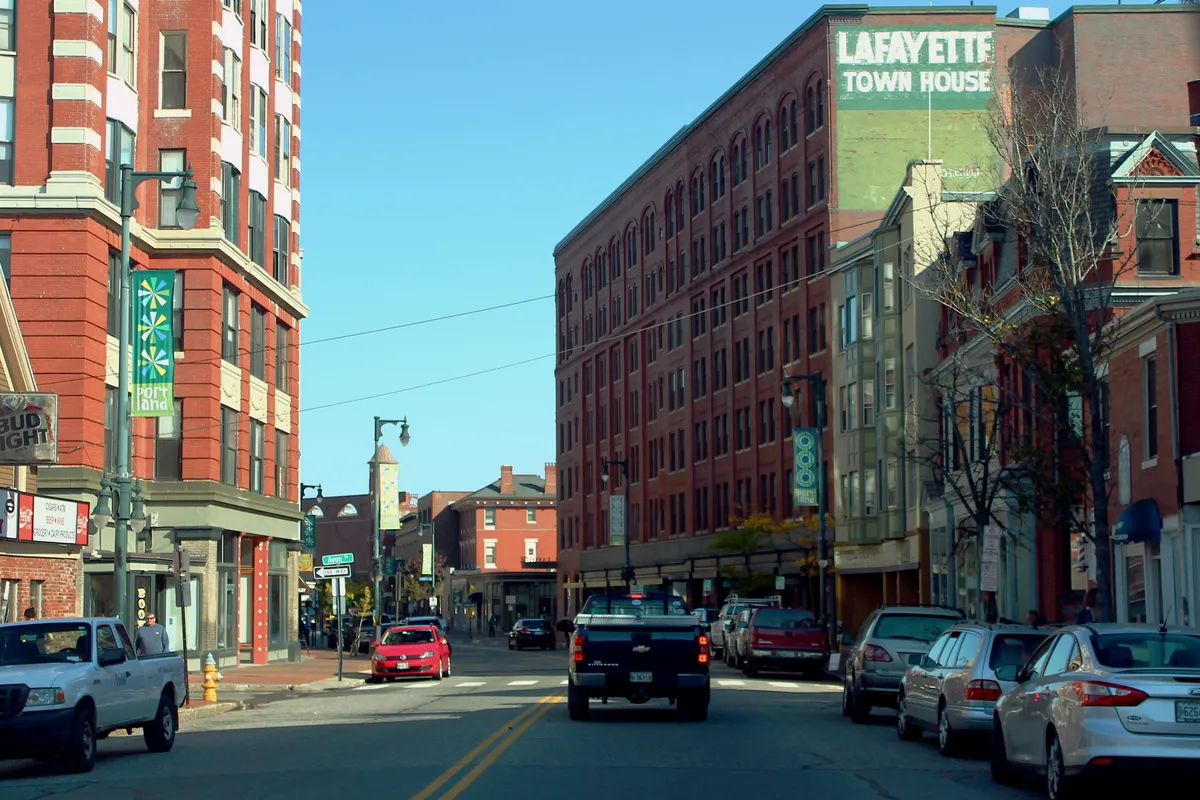
Tourists rarely have any reason to be out here. If you're driving through, keep doors locked at intersections and don't leave anything visible in a parked car.
St. John Street, Libbytown and Valley Street
This corridor near the Union Station Plaza and the Fore River Parkway has seen recurring encampments along the river trail. Libbytown itself is a regular residential area, but the edges near the highway ramps are lonely at night.
You'll pass through here heading to Thompson's Point for the train or bus. Use a ride-share instead of walking if you arrive after dark.
Quick risk snapshot by area
| Area | When to be careful | What actually happens |
|---|---|---|
| Bayside | Evenings and nights | Drug use, theft, car break-ins |
| East Bayside / Kennedy Park | Late night | Occasional disputes, property crime |
| Parkside / Deering Oaks | After dark | Drug activity, loitering in the park |
| Old Port | Weekends, midnight to 2 a.m. | Drunk fights, pickpocketing |
| Riverside Street | Anytime on foot | Camping, loitering, property crime |
| St. John St / Fore River trail | Night | Encampments, isolated walkways |
Which is the most dangerous neighborhood in Portland?
If you force a local to pick one, almost everyone will say Bayside. It consistently sees the highest volume of police calls on the peninsula, driven by drug activity, theft and disorder around the shelter and service cluster.
Keep perspective, though. "Most dangerous in Portland" still means far tamer than rough areas in Boston or Hartford. Most incidents involve people who know each other or people in crisis, not visitors walking to a restaurant.
The realistic risk for you here is a smashed car window or an aggressive panhandler. Walk with purpose, skip the poorly lit side streets at night, and Bayside is just a neighborhood you pass through.
Citywide crime at a glance
How Portland compares as a whole
Official FBI figures for the entire city, not a single neighborhood: offenses per 100,000 residents in 2025, reported by the Portland Police Department. Crime is concentrated in a few areas, so most of the city sits well below these averages.
Violent crime
251 per 100k
24% below the US rate
+6% since 2021
Murder, rape, robbery and aggravated assault · 175 offenses in 2025
Property crime
1,943 per 100k
1.3× the US rate
+7% since 2021
Burglary, theft, vehicle theft and arson · 1,357 offenses in 2025
Source: FBI Crime Data Explorer. Dashed line: US average. Police jurisdiction may not match city limits exactly. How we use this data
The fentanyl crisis and the car break-in epidemic
The single biggest safety issue in Portland isn't a neighborhood, it's the opioid crisis spilling onto the streets. Maine has been hit brutally by fentanyl, and the peninsula is where it's most visible. You may see people nodding off, needles in parks or someone in medical distress.
The direct risk to you is low, but the knock-on effect is real. A lot of property crime in Portland is driven by addiction and quick cash. That means smashed car windows, stolen bikes and porch package theft, all of which hit visitors with rental cars hard.
How to avoid becoming a statistic
- Leave your rental car completely empty, not just tidy. A charging cable or a jacket is enough to justify a broken window.
- Use paid garages over street parking overnight on the peninsula, especially in Bayside and Parkside.
- Lock bikes with a heavy U-lock, never a cable, and take the seat if it's quick-release.
- If you see someone overdosing, call 911 immediately. Maine has Good Samaritan protections, and many locals carry naloxone.
- Avoid walking the Bayside Trail and Fore River trail alone after dark.
Street-smart habits that actually work here
These Portland safety tips come from people who live here year-round, not from a travel brochure. Most of them are pure common sense, applied to local quirks.
- Treat your car like a glass box. If it's visible, assume it's gone.
- Leave the Old Port before the 1 a.m. last call on weekends to dodge the drunken chaos.
- Stick to Congress Street, Commercial Street and Exchange Street when walking at night; they're lit and busy.
- Watch your footing in winter, because ice is the real local killer; falls send more tourists to the ER than crime ever will.
- Don't engage with aggressive panhandlers or people in crisis; a polite "no, sorry" and keep walking.
- Keep your phone in your pocket around Monument Square and Congress Square, where snatch-and-runs occasionally happen.
- Check the ferry schedule if you visit Peaks Island, because missing the last boat leaves you stranded.
Do's and don'ts
Do
- Park in a staffed garage overnight.
- Explore the waterfront in daylight; it's where Portland shines.
- Use ride-share after midnight, even for short distances.
Don't
- Cut through Deering Oaks Park at night.
- Leave bags on the passenger seat, ever.
- Argue with drunks on Wharf Street at closing time.
Getting help and getting around
Portland is small, so help usually arrives fast. Here's what to have saved in your phone before you go out.
- EmergencyEmergencies: dial 911 for police, fire or ambulance.
- EmergencyPortland Police Department: headquarters at 109 Middle Street, right by the Old Port; use the non-emergency line for minor reports.
- MedicalMaine Medical Center on Bramhall Street is the state's largest hospital and has a full emergency department.
- Getting aroundGreater Portland Metro buses cover the city, but service thins out late at night.
- Getting aroundAmtrak Downeaster and Concord Coach both leave from Thompson's Point, a short ride from downtown.
- Getting aroundUber and Lyft work well, and taxis wait near the Old Port, but expect surge pricing at bar close.
- Good to knowCasco Bay Lines ferries run to the islands; check the last departure time before you go.
What changes once the sun goes down
By day, Portland is relaxed almost everywhere. At night, the city shrinks to a few busy corridors, and everything outside them gets quiet fast. Quiet here usually means safe, but not always.
The Old Port is lively and well-policed until about midnight. After that, the mood shifts from fun to messy, especially on Wharf Street and the lower end of Fore Street. Grab your last drink early and head out before the crowds hit the sidewalks.
Nothing bad happens in the Old Port at 9 p.m. At 1:15 a.m.? That's a different town entirely.
Avoid parks and trails entirely after dark, including Deering Oaks, the Bayside Trail and the Eastern Promenade's lower paths. They're unlit, isolated and attract camping. The Eastern Prom is magical at sunset, just be back on the road once it's dark.
The safest neighborhoods in Portland, Maine
Good news: most of Portland falls into the safe category. These areas give you easy access with very little hassle.
West End
The West End is all Victorian mansions, tree-lined streets and a calm, established residential vibe. It's walkable to downtown and full of B&Bs. Its edges near Congress Street and the hospital get a bit busier, but the core is very quiet.
Munjoy Hill
On the eastern end of the peninsula, Munjoy Hill offers killer views and a neighborhood feel. It's packed with cafés and close to the Eastern Promenade. Crime here is mostly limited to the occasional car break-in.
Deering Center and Back Cove
Just off the peninsula, Deering Center is family territory with very low crime. Back Cove has a popular walking loop around the water that's busy and safe during the day.
South Portland and Cape Elizabeth
Across the bridge, South Portland and Cape Elizabeth are among the safest places in the region. You'll need a car, but you get beaches, lighthouses like Portland Head Light and a dead-quiet night's sleep.
Portland for solo female travelers
Women traveling alone generally report feeling comfortable and unbothered in Portland. Catcalling exists but is much less common than in bigger cities, and the downtown restaurant scene is very solo-friendly.
The main thing to watch is late nights in the Old Port. Crowded bars mean the usual risks, so watch your drink, stick with people you trust and book your ride home before you leave the bar.
Quick answers before you pack
Still have questions? These are the ones locals hear most.
Is it safe to walk at night in Portland, Maine?
On the main streets of the peninsula, yes. Stick to busy, well-lit routes like Congress Street and avoid parks and trails after dark.
Is crime in Portland getting worse?
Crime in Portland has seen ups and downs, mostly in property crime and visible disorder tied to homelessness and drugs. Violent crime remains low compared to most American cities.
What are the main areas to avoid in Portland at night?
Locals usually point to Bayside, Deering Oaks Park and isolated trails, plus the Old Port right around bar close on weekends.
Is it safe to leave things in my car?
No. Car break-ins are the most common crime affecting visitors, so leave absolutely nothing visible, even overnight in quieter neighborhoods.
Lobster rolls, sea air and a little common sense
Portland is one of those places where the worst neighborhoods in Portland would barely register on a big-city crime map. The real risks are broken car windows, drunk crowds and winter ice, not muggings in dark alleys.
Respect the rough edges, especially around Bayside and late-night Old Port, and treat people in crisis with distance and decency. Most of what you'll see is a public health problem, not a threat aimed at you.
Then go enjoy the city. Eat too much seafood, walk the Eastern Prom at sunset and catch the ferry to Peaks Island. Portland rewards the visitor who pays attention, and it's well worth the trip.
This guide is general safety information, not a guarantee of safety. Conditions change; check local news and official sources before you go. In an emergency, call 911.
Nearby city guides
 Lowell
90 mi away
 Lynn
90 mi away
 Boston
100 mi away