Dangerous neighborhoods in San Antonio
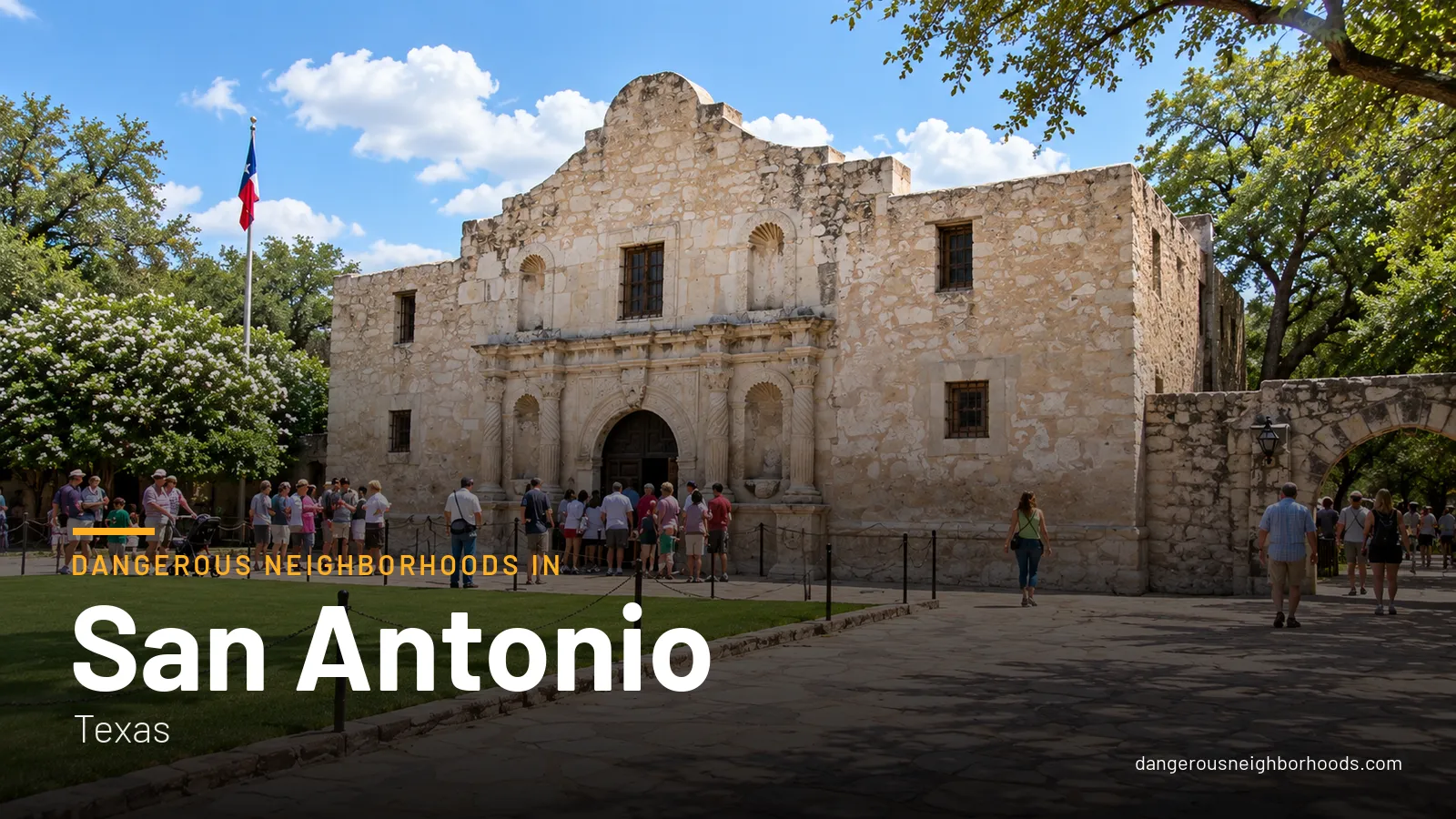
San Antonio does not have a single "dangerous neighborhood" you can circle on a map and avoid. It is a big, spread-out city where conditions change by block, by venue, by event and by hour. For visitors, the more useful approach is to know a handful of specific corridors, transit points and late-night situations that call for extra attention, and to understand what the official numbers do and do not tell you.
This guide focuses on micro-areas, not whole communities. A police "hot spot" or a street with many calls for service is not a verdict on everyone who lives nearby. Where a location appears below, it is because it is either heavily visitor-facing or has been publicly identified for targeted safety work. It is not because the surrounding neighborhood is uniformly unsafe.
What the recent crime numbers actually say
The citywide direction has been favorable. According to the City Council record of SAPD's January–December 2025 statistics, overall reported crime fell 17.5% in 2025, and motor-vehicle theft fell 25.6%. For anyone arriving by car, that second figure is worth noting, though it does not mean vehicle crime has disappeared downtown.
The breakdown by category is mixed. In the January–November comparison SAPD presented, crimes against persons fell 9% (from 31,179 to 28,361) and property crime fell 18.1% (from 100,457 to 82,232). Crimes against society rose 15.4% (from 11,892 to 13,721), largely because of drug and narcotics enforcement. An increase in that category often reflects more police activity rather than more danger to a visitor walking to dinner.
These are raw counts, not rates. The figures are reported incidents. They are not adjusted for population, the number of visitors, nightlife foot traffic or the number of trips people take. A busy entertainment district can generate many reports simply because huge numbers of people pass through it, so a high count on its own does not tell you your personal odds on a given evening.
Violent street crime has also dropped. The city and UTSA Year 3 update on San Antonio's crime-reduction plan reported a 21.1% decline in violent street-crime incidents and a 20.8% decline in violent victimization in 2025 compared with 2024. Treated hot spots fell 63.2% during the comparable treatment periods. The earlier independent Year 2 report found citywide violent-crime incidents down 9.6% in 2024 versus 2023, while cautioning that many percentage changes rested on small numbers.
Use the trend as context, not as a guarantee. A favorable citywide direction is not proof that any particular block is low-risk tonight. If you want to check for updates before a trip, SAPD's NIBRS open-data page publishes year-over-year crime-statistics tables and is the primary place to look.
Which is the most dangerous neighborhood in San Antonio?
There is no reliable, definitive answer, and any article that hands you a confident "number one" is overselling what the data can show. The official figures discussed above are citywide incident counts, not neighborhood-level rates adjusted for population or visitor volume. Ranking entire named communities from that kind of information would be misleading.
What the records do show is more specific. Certain corridors and addresses have been named by officials for particular problems: a downtown stretch with many calls for service and car burglaries, a nightlife strip with fights after dark, and a few precise addresses selected for violence-reduction work. Separately, the City has flagged several roads as especially dangerous for pedestrians, which is a traffic problem rather than a crime one.
For a visitor, the practical question is different. Instead of asking which neighborhood is worst, ask which situations you will actually be in: parking a car downtown, walking back from a bar late on a Saturday, crossing a multilane road after dark, or waiting at a transit stop. Those are the moments where planning makes the biggest difference, and they are covered in detail below.
Citywide crime at a glance
How San Antonio compares as a whole
Official FBI figures for the entire city, not a single neighborhood: offenses per 100,000 residents in 2025, reported by the San Antonio Police Department. Crime is concentrated in a few areas, so most of the city sits well below these averages.
Violent crime
532 per 100k
1.6× the US rate
-24% since 2021
Murder, rape, robbery and aggravated assault · 8,249 offenses in 2025
Property crime
3,918 per 100k
2.5× the US rate
+1% since 2021
Burglary, theft, vehicle theft and arson · 60,703 offenses in 2025
Source: FBI Crime Data Explorer. Dashed line: US average. Police jurisdiction may not match city limits exactly. How we use this data
Specific corridors and places where extra caution makes sense
Think of these as places to manage, not places to fear. Most are busy, well-known and visited by large numbers of people without incident. The point is to know what kind of problem has been reported in each so you can take the right precaution.
Where to take extra care
Circles show approximate areas, not exact borders. Tap a zone for details.
Commerce Street and Losoya Street downtown
The stretch of Commerce Street–Losoya Street between North St. Mary's Street and Alamo Plaza has been identified by downtown security stakeholders as generating many calls for service. Officials specifically cited car burglaries and stolen guns as continuing problems. This is central tourist territory, so you will almost certainly pass through it.
- Leave nothing in a parked car, including bags, shopping, chargers or anything that looks like it could hold valuables.
- Keep phones and wallets secured in a front pocket or a closed bag, especially in crowds.
- Plan a staffed, well-lit route back to your lodging rather than cutting through quiet side passages.
The North Alamo Street nightlife strip
SAPD's downtown unit has described North Alamo Street's bar strip as an emerging "Sixth Street" style nightlife area. The unit reported recurring overservice, intoxication, fights and a recent shooting, and responded by adding officers on Fridays and Saturdays. The risk here is mostly a late-night, alcohol-driven one.
- Stay with your companions and agree on a meeting point in case you get separated.
- Walk away from arguments rather than engaging, even if you feel you are in the right.
- Pre-arrange your ride home so you are not standing on the street with your phone out as bars empty.
The downtown River Walk core
The River Walk is heavily patrolled, with River Walk Patrol covering the River Walk, La Villita, Hemisfair/Civic Park and other downtown public spaces on foot, by bicycle and by boat, and assisting tourists. That visible presence is genuinely useful, but it does not remove every practical risk in a crowded, alcohol-friendly setting beside open water.
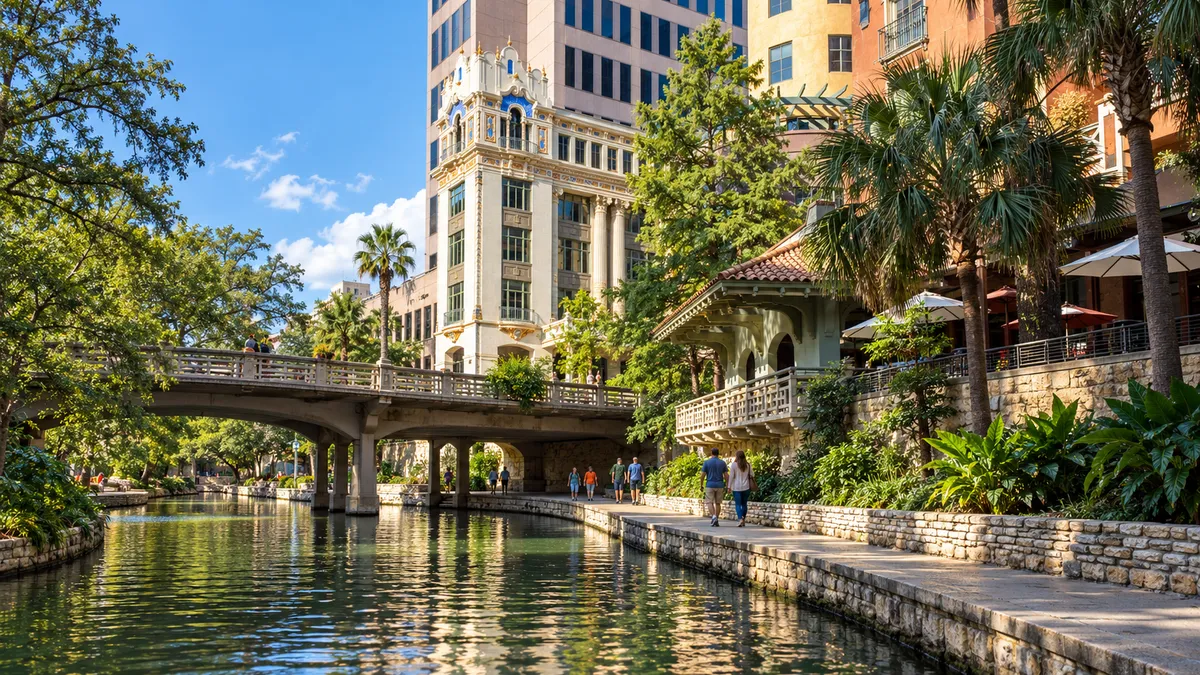
- Watch your footing at stairs and bridge transitions, where crowds bunch up and slips or falls are more likely.
- Keep children and tipsy friends away from the water's edge, particularly at night.
- Hold onto your phone in busy nightlife and event segments, where theft and separation from your group are realistic concerns.
- Keep single incidents in perspective: a 2025 local report described a deadly employee shooting as isolated rather than evidence that the entire attraction is unsafe.
Market Square, West Commerce Street and the Zona Cultural
Market Square and the Zona Cultural event area are among the busiest visitor-facing spaces in the city. Event crowds and street closures regularly change routes and access. For Fiesta 2025, the City used fencing, controlled entrances, bag checks and metal detectors at Milam Park and Market Square, and advised people to plan sober transport.
- Treat the approach as part of the trip: the surrounding blocks and parking areas matter as much as the event gate itself.
- Cross only at marked crossings, since closures can push traffic onto unfamiliar routes.
- Do not display valuables while queuing or walking back to your car.
Rigsby Avenue and East Southcross Boulevard
These are not sightseeing areas, but they are precise examples of locations that have received targeted violence-reduction attention. The Year 2 report selected 1303 Rigsby Avenue, around Rosemont at Highland Park, as a place-based pilot site. The 2025 update reported a 50% drop in violent crime and victimization at 4032 E. Southcross Boulevard after targeted work there.
Do not generalize from these addresses. They do not mean that all of Highland Park, the East Side or any nearby community is dangerous. If you have a specific appointment in the area, use the exact address, go in daylight if you can, and take a door-to-door ride rather than wandering or parking far away.
High-injury roads for pedestrians
Zarzamora Street, Fredericksburg Road and W.W. White Road have been designated by the City as High-Injury Network corridors. TxDOT data cited by the City recorded 769 area pedestrian crashes, 83 fatalities and 168 serious injuries in the prior year. This is a traffic-safety warning, not a crime ranking, but for someone on foot it can be the more serious risk.
- Use signalized crossings even if it means walking further.
- Stay visible after dark with light clothing or a phone light when walking along the roadside.
- Never cross multilane roads mid-block, no matter how quiet the traffic seems.
How time of day and behavior change the picture
Daylight and active, staffed places are easier to navigate than quiet parking lots, isolated blocks or river-level paths after the nightlife crowd has gone. The same stretch of downtown can feel completely different at 3 p.m. on a weekday and in the early hours of a Sunday.
Risk shifts sharply at predictable moments. Friday and Saturday bar closing, large festivals, sporting events and the rush of people leaving an event all concentrate crowds, alcohol and traffic at once. Alcohol raises exposure to conflict, theft, water-related accidents and impaired driving.
Heavy policing and crowd problems can coexist. Downtown is often heavily policed during major events and can still see crowd-related theft and fights. Officers nearby are a reason for reassurance, not a reason to relax your own basic precautions.
Avoid drawing conclusions from one data point. A single frightening incident in the news does not define a place, and neither does a single calm visit. Base your plans on patterns: where you will be, at what time, and in what condition.
Late-night and parking guidance
Parking is one of the most common visitor pain points, especially given officials' focus on car burglaries downtown. A few habits cut most of the exposure.
- Choose attended or controlled parking where possible, and favor well-lit levels near exits or staffed booths.
- Empty the car completely before you arrive, not in the lot where someone can watch you move items to the trunk.
- Never leave a firearm in a vehicle; stolen guns from cars were specifically cited by downtown officials as an ongoing problem.
- Walk back in a group after dark, and have your keys ready so you are not lingering beside the car.
- Plan sober transport for any night that involves drinking, as the City advises for major events like Fiesta.
- Request rides from a busy, lit spot such as a hotel entrance rather than a dark corner after bar close.
Using public transit safely
VIA Transit Police patrol the service area and facilities, so there is a dedicated police presence on the public transit system. Like anywhere, the main visitor risks are opportunistic theft and uncomfortable encounters, particularly at quieter stops later in the evening.
- Wait in lit, populated areas rather than at the far end of a stop or in a dark shelter.
- Keep bags closed and on your lap or between your feet.
- Avoid displaying your phone at the curb, where it can be snatched as a vehicle pulls up.
- Move away from threatening behavior and report it rather than confronting anyone.
Emergency numbers and what to say
Save these numbers before you need them. They come directly from SAPD and VIA's own published contact information.
- 911 for any emergency, including an immediate threat, injury, fire or crime in progress.
- (210) 207-7273 for SAPD non-emergency police service.
- (210) 362-2439 for VIA Transit Police emergency service.
- (210) 362-2117 for non-emergency transit assistance.
- (210) 362-2020 for VIA customer service.
Location details speed up a response. When you call, give the exact street, venue name, platform or stop, or the specific River Walk access point. Do not approach or chase a suspect; your job is to get safe and report clearly.
Sensible bases for your stay
Look for practical features rather than a "safest area" label. For a first visit, prioritize lodging with 24-hour staff, controlled or attended parking, good lighting, and an active walk to the places you actually plan to visit. Those features reduce friction regardless of the district.
- Convention center / Hemisfair and the downtown core: convenient for walking to major sights and events, with public-space patrol coverage nearby.
- The River Walk core: central, busy and patrolled, though you should plan for noise, crowds and late-night foot traffic.
- The Pearl / Museum Reach area: a practical option if your plans center on that part of the river.
- North-Central or airport hotels: sensible when your itinerary is car-based or built around an early flight.
These are convenience suggestions, not crime rankings. They reflect visitor services, patrol coverage and transport access, not a claim that one district has the lowest crime rate. A suburban base can feel calmer, but it may add late-night driving and more time spent walking to and from parked cars.
Frequently asked questions
Is downtown San Antonio safe for tourists?
Downtown is busy, heavily visited and patrolled, including River Walk Patrol on foot, bicycle and boat. The main reported issues are car burglaries, phone theft in crowds and alcohol-related fights late at night, so secure your belongings, empty your car and plan your route home.
Is the River Walk safe at night?
The River Walk core stays active and patrolled, but after nightlife empties, river-level routes can become quiet. Stay with your group, watch your footing near stairs and water, and return via lit, busy segments.
Is crime going up or down in San Antonio?
Official figures point down overall. Reported crime fell 17.5% in 2025 and violent street-crime incidents dropped 21.1% versus 2024, though these are raw counts, not rates adjusted for population or visitors.
Which areas should I avoid late at night?
Focus on situations rather than neighborhoods. Take extra care on the North Alamo Street bar strip around closing time, in quiet parking lots, and on dark stretches of high-speed roads like Zarzamora Street, Fredericksburg Road and W.W. White Road.
Is it safe to use VIA buses as a visitor?
VIA has its own transit police patrolling the service area. Wait in lit, populated spots, keep bags closed and phones out of sight at the curb, and call (210) 362-2439 for VIA Transit Police emergency service or 911 in any emergency.
Where should I stay in San Antonio for a first trip?
Choose features over labels: 24-hour staff, controlled parking and good lighting. Downtown and Hemisfair, the River Walk core, the Pearl area, or a North-Central or airport hotel are practical bases depending on your plans.
What should I do if my car is broken into?
Call SAPD non-emergency at (210) 207-7273 to report it, or 911 if a crime is in progress or anyone is threatened. Do not approach or chase anyone you see near the vehicle.
The bottom line is preparation, not avoidance. San Antonio's recent trend is favorable, and most visitor risk comes from a few predictable moments: parking, crowds, late nights, alcohol and busy roads. Plan those moments carefully, keep the emergency numbers handy, and you will be able to enjoy the city with confidence.
This guide is general safety information, not a guarantee of safety. Conditions change; check local news and official sources before you go. In an emergency, call 911.
Nearby city guides

More city guides in Texas
 Houston
 Dallas
 Austin
 Fort Worth
 El Paso
 Arlington
 Abilene
 Allen