Dangerous Neighborhoods in Simi Valley

If you Googled this because you’re hearing “sketchy stuff” and want the truth, here it is: Simi Valley is mostly a quiet suburban city, and the main risk for visitors is usually property crime, not random violence. The FBI-style numbers people cite for 2024 put Simi Valley’s violent crime rate around 129 per 100,000 residents and property crime around 924 per 100,000, which is not “big-city chaos.”
The useful way to think about dangerous neighborhoods in Simi Valley is “where do you get your car rummaged through, your bike lifted, or your stuff snatched if you’re sloppy.” Those patterns tend to follow retail density, freeway access, and areas with lots of shared parking, and even third-party crime maps point out the west side can look “hotter” partly because it has more retail incidents, not because it’s a war zone.
Why this valley feels calm until it doesn’t
Simi sits in a weird sweet spot: it’s a bedroom community connected to bigger job and nightlife gravity (the San Fernando Valley and greater LA), but it still runs on a suburban rhythm. That mix usually produces opportunity crime around errands and commuting, not constant street trouble.
A lot of the “unsafe” feeling comes from micro-hotspots where strangers blend in easily: strip malls, big parking lots, transit nodes, and the stretches where you’re on foot for 90 seconds longer than you planned. In Simi, attention drops in exactly those places, and that’s when thieves do their thing.
Old ranch town meets commuter suburb
Simi has older cores (like Old Town) and newer master-planned hills (like Wood Ranch and parts of the north end), and they live different lives. The older grid areas get more foot traffic, more mixed housing, and more “people passing through,” which can mean more nuisance calls even if the serious crime rate stays relatively low.
One more thing locals don’t always say out loud: where you see more “sketch” in Simi, it’s often a mix of homelessness, addiction, and petty theft intersecting with easy targets. That’s a messy social problem, not a “bad people neighborhood” problem.
The rougher pockets of Simi Valley you should actually understand
If you’re searching worst neighborhoods in Simi Valley, what you really want is a short list of places where you should tighten up your habits. Think “don’t leave anything visible, don’t wander the bike path alone at night, don’t assume a quiet street means zero risk.”
Where to take extra care
Circles show approximate areas, not exact borders. Tap a zone for details.
Patricia neighborhood and the apartment belt
This is one of the few parts of Simi that gets talked about like a “neighborhood” with clear boundaries, and it’s also where you’ll find more apartments and shared parking than most of the city. More density means more strangers, more cars, and more chances for quick theft when people get complacent.
Translation for travelers: you’re not likely to get mugged walking to lunch, but you are more likely to deal with a smashed car window, a rifled center console, or a stolen package if you treat it like a gated suburb. That’s why it keeps showing up in neighborhoods to avoid in Simi Valley conversations.
Los Angeles Avenue corridor with strip malls and fast in and out parking
This corridor is basically “Simi’s errands spine,” which means it attracts everyone: shoppers, commuters, bored teenagers, and people looking for an unlocked door. Retail-heavy zones generate lots of reports, and maps often show higher incident counts where there are simply more targets per block.
How it goes wrong: you hop out “just for a second,” leave a bag on the seat, and now you’re spending your afternoon filing a report and canceling cards. If you want areas to avoid in Simi Valley, this is less about fear and more about reducing exposure during peak shopping hours.
Old Town Simi grid when it’s quiet and you’re the only one walking
Old Town is historically meaningful and, during the day, mostly normal and even charming. The issue is that some blocks get very empty at night, and empty streets plus parked cars equal easy picking for someone trying door handles.
If you’re walking around late and you’re the only person out, don’t pretend you’re in a movie. That’s when you become the only target.
Don’t overdramatize it: you can absolutely go to dinner and be fine. Just don’t wander aimlessly behind businesses or along dark stretches with headphones on, because “nobody’s around” is exactly the problem. That’s the real logic behind late-night discomfort here.
Simi Valley Town Center and big lot behavior
The Town Center area is a classic “safe place where crimes happen anyway,” because huge lots invite people to relax their guard. It’s located off SR-118 between First Street and Erringer Road, and it pulls a lot of regional traffic, meaning lots of anonymous movement around cars.
What to do: park under lights, don’t sit scrolling in your car with the engine off, and don’t leave anything in view. If you have to rearrange luggage, do it at home or at least in a spot where you’re not advertising what you’ve got. This is one of the “dangerous parts of Simi Valley” only if you’re predictably careless.
Metrolink station area and the edges of Tapo Canyon Road
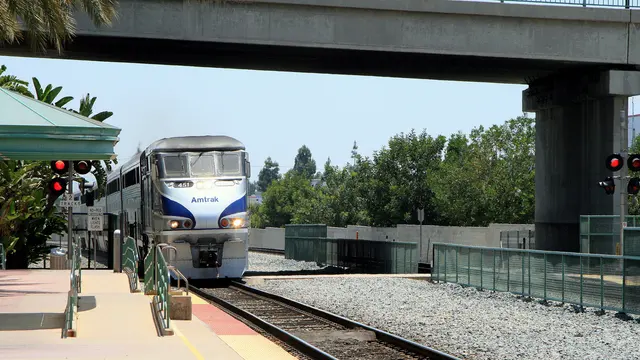
Transit zones anywhere mean two things at once: normal commuters and people who loiter because it’s a sheltered public space. The Simi Valley Metrolink station sits at 5050 Los Angeles Ave, and it has large free parking, which is convenient and also a place where you should think about your vehicle like you’re in a city lot, not your driveway.
Rule of thumb: arrive with a plan, don’t drift around the perimeter, and if something feels off, move closer to other people or leave. Most trouble here is low-grade, but “low-grade” still ruins your night if it turns into harassment or theft.
West end industrial pockets after business hours
Simi’s industrial zones aren’t “dangerous” in the Hollywood sense, they’re just empty. Empty means fewer witnesses, slower “someone will help me” energy, and more risk if you break down or meet the wrong person. The smart play is don’t linger there late, especially alone.
If you’re doing a late pickup, keep your doors locked, stage your route, and don’t get sucked into weird parking-lot conversations. This is exactly where opportunistic people test if you’re distracted, polite, and easy to manipulate.
Hillside edges and trailhead parking near Corriganville style areas
This one surprises visitors: nature access can be a magnet for car prowls because lots feel isolated and people leave valuables while they hike. The crime isn’t happening “on the trail” as much as at the edge where cars sit unattended, and third-party maps even note parks can inflate property crime the same way retail does.
Don’t leave wallets in gloveboxes, don’t hide stuff under seats (everyone knows that trick), and don’t assume daylight equals safety. Your best defense is making your car look boring enough that the thief moves on to a better target.
Street level cheat sheet for fast decisions
Use this like a human, not like an algorithm. The goal is to avoid the specific conditions that create problems: big lots, dead blocks, shared parking, and being visibly lost. That’s what turns a normal suburb into a bad moment.
| Area | What usually goes wrong | Best defensive habit |
|---|---|---|
| Patricia | car prowls and package problems in shared parking | leave nothing visible and use lit parking |
| Los Angeles Avenue corridor | retail lot theft and quick smash-and-grab | park smart and keep stops short |
| Old Town Simi | empty-block unease and door-handle testing | walk with purpose and skip dead streets |
| Town Center lots | stuff taken from cars while you shop | no bags on seats ever |
| Metrolink area | loitering hassles and vehicle targeting | arrive and go don’t hang out |
| Industrial pockets | low visibility and slow help | don’t linger late |
| Trailhead parking | window pops when lots feel isolated | empty your car before you arrive |
Which is the most dangerous neighborhood in Simi Valley?
If you force me to name one, it’s Patricia.
Not because it’s “gangland,” but because it has the right mix of density, shared parking, and nearby commercial traffic to produce more petty incidents. In Simi, “most dangerous” usually translates to most annoying crime and the highest chance you’ll deal with theft from a vehicle or a package issue.
Take it seriously in the practical ways: keep your car empty, don’t leave bikes outside unsecured, and don’t assume a calm street means you can zone out. The fastest way to lose in this pocket is visible valuables.
Citywide crime at a glance
How Simi Valley compares as a whole
Official FBI figures for the entire city, not a single neighborhood: offenses per 100,000 residents in 2025, reported by the Simi Valley Police Department. Crime is concentrated in a few areas, so most of the city sits well below these averages.
Violent crime
137 per 100k
58% below the US rate
+42% since 2022
Murder, rape, robbery and aggravated assault · 172 offenses in 2025
Property crime
771 per 100k
50% below the US rate
-11% since 2022
Burglary, theft, vehicle theft and arson · 969 offenses in 2025
Source: FBI Crime Data Explorer. Dashed line: US average. No complete data for 2021. Police jurisdiction may not match city limits exactly. How we use this data
The Simi problem nobody talks about loud enough
Simi Valley’s most consistent visitor headache is parking-lot and “quick grab” theft. It’s not sexy, it’s not headline stuff, and it’s exactly why people get sloppy and then get burned by one-minute mistakes.
Here’s the mechanism: retail and park lots create predictable patterns, thieves don’t need to follow you home, and they don’t need to confront you. They just need you to leave a backpack on the seat, or stash something under a jacket, or step away while your trunk is open. That’s the whole game.
Avoidance guide for the lazy and the smart
- Do your “car organization” at home, not in a lot where someone can clock your habits and hit you later when you’re inside. That’s target selection in real time.
- Park under lights and near foot traffic, even if it means a longer walk. You’re buying social friction against theft.
- If you must leave something, put it in the trunk before you arrive, not after you park. Watching you “hide” a bag is basically free advertising.
Honorable mentions that feel like they are sliding
These aren’t “avoid at all costs” zones, they’re places where you’ll notice more complaints, more Nextdoor energy, and more low-level weirdness. The pattern usually follows redevelopment corridors and busy arterials where the city is trying to become more walkable, which is great, but also creates transitional blocks with uneven foot traffic.
Keep a sharper eye around older plaza clusters on major roads, and around the edges of transit and bike-path access points, especially after dark. The risk is rarely physical harm; it’s more like getting stuck in a nuisance encounter or coming back to a messed-with car.
Also, don’t confuse “quiet” with “watched.” Some blocks are quiet because there’s nothing open, and that means fewer witnesses if someone decides to test door handles or prowl around. Quiet can be a false comfort.
How to move in Simi without becoming the easy target
Below is the stuff locals do automatically. None of it is paranoid; it’s just what you do in any Southern California suburb that has retail, transit, and freeway access. The vibe you want is calm and alert, not tense.
- Top rule: keep your car interior visibly empty, even for “two minutes.”
- Park where you can see people and cameras, not where you can see mountains. Choose boring visibility over scenic isolation.
- If you’re lost, step into a business and reset, instead of standing outside with your phone out. Don’t advertise tourist confusion.
- At the Town Center or any big lot, don’t sit in your car scrolling. That posture screams distracted and stationary.
- Use well-lit routes from parking to doors. Darkness adds time, and time adds opportunity for nonsense.
- Don’t “hide” bags under seats. People know that move. It’s the oldest trick in the book.
- If someone tries to pull you into a long conversation in a lot, politely end it and move. You are not obligated to be publicly friendly.
- If you’re taking Metrolink, arrive close to departure, and keep your space. Transit areas reward purposeful movement.
- If you’re hiking, empty the car first, then go. Trailhead lots are where thieves look for predictable patterns.
Do's and Don'ts
Do
- Keep keys in a secure pocket and stay aware at gas stations, because that’s where distraction happens.
- Use rideshare for late nights if you’re drinking, because parking-lot wandering is where bad decisions start.
- Trust your gut and leave if a block feels off, because “it’s probably fine” is how you end up with a stupid story.
Don't
- Leave phones or purses on restaurant patios while you “just look away,” because that’s snatch timing.
- Walk isolated bike paths alone late, because visibility drops and you lose escape options.
- Answer surprise calls claiming to be officials asking for money, because that’s scam territory.
When you need help fast and how to get around cleanly
If something goes sideways, speed matters more than bravery. Save the basics in your phone and don’t rely on “I’ll Google it later,” because later is when you’re stressed and making sloppy choices.
- MedicalFor immediate danger or medical emergencies, call 911 right now, not your friend, not your hotel.
- EmergencyFor non-emergency police help in Simi, use SVPD dispatch at (805) 583-6950 (and don’t trust random callback numbers).
- Getting aroundMetrolink riders should know the station is at 5050 Los Angeles Ave, with large free parking, so treat it like a big public lot.
- Good to knowIf you need local services, Ventura County’s 211 line can connect you to resources, which helps if you’re dealing with non-crime emergencies like shelter or basic needs.
- Getting aroundIf you break down, move to a lit business frontage if possible and keep doors locked, because a shoulder stop is prime vulnerability.
- Getting aroundIf you’re meeting someone new, pick a busy place and share your location, because privacy is great until it becomes isolation risk.
Nighttime in Simi is mostly boring but don’t be dumb
Simi’s nightlife isn’t huge, which is exactly why things can feel weirder when bars close: fewer people, fewer open businesses, and more “why is that person just standing there” moments. Your goal is to avoid being the only moving target on an otherwise dead block.
If you’re out late, stick to well-lit routes, don’t cut through empty lots, and don’t take the long romantic walk back if you’ve been drinking. Take the 6-minute rideshare and keep your night clean and simple.
If you flash your phone in a dark parking lot, you’re not ‘checking directions,’ you’re showing inventory.
And yes, you’ll find plenty of people online swapping lists of “areas to avoid in Simi Valley.” Use those lists as a reminder to tighten your habits, not as a reason to panic. The city is generally calm; your biggest enemy at night is usually overconfidence.
Safe neighborhoods and calm bases in Simi Valley
If you want a stress-free stay, aim for residential hills or newer planned neighborhoods where the streets empty out early and the problems are more “coyote sightings” than people drama. Even third-party maps suggest some parts of the city (often the south) are generally viewed as lower risk.
Wood Ranch
Wood Ranch sits toward the southwestern edge of the city and is widely thought of as a nicer, quieter pocket. It’s the kind of place where your main “safety” issue is leaving your garage open, not dealing with street trouble, which is exactly what you want for a low-noise base.
Bridle Path
Bridle Path is an equestrian community in the southwest hills, and it feels like a different planet from the commercial strips. It’s calmer, more residential, and not built around parking lots and foot traffic, which reduces the usual petty crime exposure.
Big Sky
Big Sky is up on the north side along Erringer and into the canyons, and it tends to feel “tucked away.” That can mean quiet nights and fewer random encounters, though canyon-style living has its own realities like wind and occasional power-related disruptions.
Texas Tract
The Texas Tract is a big east-end neighborhood of mostly single-family homes. For travelers, it’s usually just a calm place to sleep and reset, with fewer of the big-lot dynamics that create the classic “my car got hit” stories, so it’s a solid no-drama option.
Solo traveler wildcard and who needs to be extra strategic
If you’re traveling solo, especially if you’re a solo woman, your biggest win is removing the “lost and isolated” look. In Simi, most people are normal, but the occasional creep or opportunist is hunting for low-resistance situations, not a fight.
Stay in well-reviewed properties, don’t give strangers your full plan, and don’t let politeness trap you in a conversation. Your “no” is a complete sentence, and getting out of a weird vibe early is how you avoid escalation paths.
If you’re going for a walk, do it in daylight and in areas with other walkers. Night walks on empty paths might feel peaceful, but they remove witnesses and options, which is the opposite of what you want for personal safety math.
Insider notes locals won’t always explain
When locals say “neighborhoods to avoid in Simi Valley,” they’re often really saying “don’t live with your guard down near the busy arteries.” It’s less a moral judgment and more a warning about where convenience creates more anonymous traffic.
Also, don’t let online maps mess with your head. Some tools paint areas red because they’re near shopping, parks, or big roads, which naturally generate reports. That doesn’t always mean higher personal danger; sometimes it just means more reporting volume.
Deep dive the fake cop phone call scam and how it works
This one is worth knowing because it hits people who think they’re “too smart to get scammed.” SVPD has had warnings about callers spoofing police numbers and using convincing messages, including AI-style voicemails, trying to pull people into calling back and providing information or money. The defense is verify everything.
- You get a call that looks like it came from police, and the caller sounds official, urgent, and slightly annoyed to push you into fast compliance.
- They claim you missed something serious and give you a callback number or extension, trying to isolate you from normal channels. That’s control of the situation.
- If you call back, you may hit a fake voicemail system that asks for personal info or nudges you toward paying “fees” or “donations.” That’s the money funnel.
- The correct move is to hang up and independently call the known SVPD dispatch number, not the number they give you. That one habit breaks the entire scam.
Fast answers people want before they book
Still unsure? These are the questions that matter, with no fluffy talk.
Is it safe to walk at night in Simi Valley?
Mostly, yes, but don’t confuse “quiet” with “safe for wandering.” Stick to lit streets, skip empty lots and paths, and don’t be the only person outside on a dead block.
What are the areas to avoid in Simi Valley if I only have one day?
You don’t need to avoid huge parts of town, but you should be extra disciplined around big retail lots and the denser apartment pockets. The risk is usually property theft, so plan quick stops and keep your car empty.
Which neighborhood is the worst neighborhoods in Simi Valley for visitors?
Visitors usually have the most problems in places where they park and shop, not places where they walk past houses. If you make your car a boring target, you eliminate a big chunk of the visitor risk.
Any Simi Valley safety tips for families using the Town Center area?
Yes: park under lights, hold kids close crossing lots, and don’t load purchases in a way that shows what you bought. Your main win is preventing parking-lot theft, not fearing strangers.
The soul of Simi is chill and outdoorsy so travel like you belong
Simi Valley is not a place that needs fear-based travel. It’s a place that rewards basic street sense: keep your stuff tight, move with purpose, and don’t do the “I’m safe because it’s suburbs” routine. That routine is how you end up with a broken window.
If you want the good version of Simi, lean into daytime errands, trails, and low-key meals, and treat big parking lots like the only real “high alert” zones. Most locals live normal lives here, and even SVPD has publicly pointed to overall crime moving in the right direction. That’s the real baseline.
So yeah, read the internet, but don’t let it program you. Keep your habits sharp, don’t go looking for drama, and you’ll probably experience Simi as it usually is: calm, sunny, and pleasantly uneventful.
This guide is general safety information, not a guarantee of safety. Conditions change; check local news and official sources before you go. In an emergency, call 911.
Nearby city guides


More city guides in California
 Los Angeles
 San Diego
 San Jose
 San Francisco
 Fresno
 Sacramento
 Long Beach
 Oakland