

Dangerous Neighborhoods in Rockford
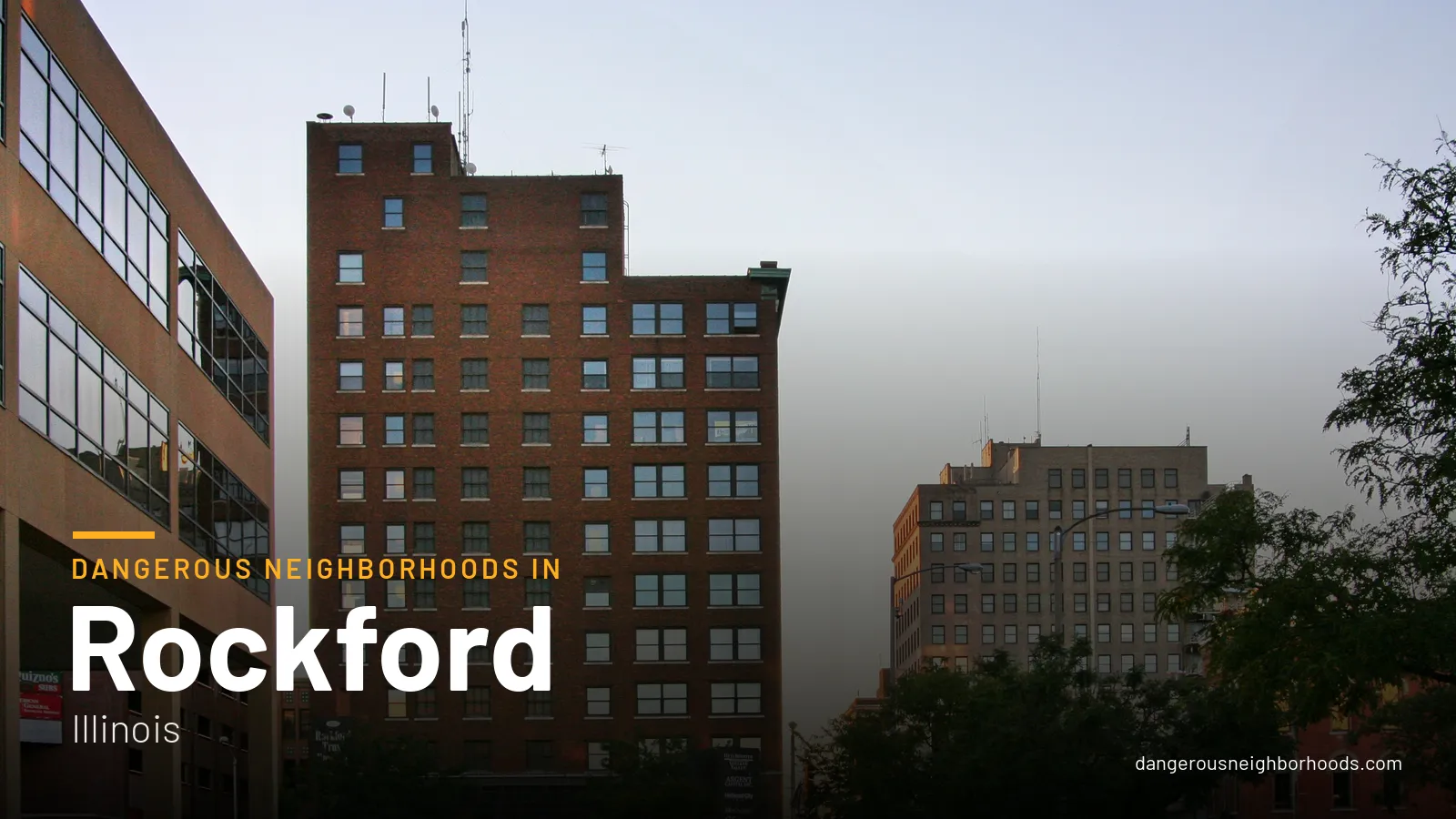
When you start digging into the realities of Northern Illinois, the question of is Rockford safe almost immediately surfaces. For years, this city has consistently ranked high on national statistics for violent offenses, making it a place where street smarts are absolutely mandatory. The reality is that the danger isn't evenly distributed, but rather concentrated in highly specific pockets.
If you are planning a visit or a move, knowing the layout of the bad areas in Rockford will save you from becoming another statistic. Warning Relying purely on a GPS can easily reroute you through troubled blocks just to save two minutes of driving time. Understanding the local geography is your first and most effective line of defense.
While the downtown core has seen a push for revitalization, stepping a few blocks in the wrong direction can completely change the atmosphere. This guide strips away the PR talk to give you an unfiltered look at the harsh realities on the ground.
The roots of the rust belt struggle
Rockford's current landscape of insecurity wasn't built overnight. Like many midwestern hubs, the city suffered a massive economic blow when heavy manufacturing left town. Decades of job losses created a vacuum that was quickly filled by poverty and systemic neglect in the west and south side districts.
As factories boarded up, generational wealth evaporated, leaving certain zip codes to fend for themselves. This economic desperation laid the foundation for the high levels of crime in Rockford that continue to plague the region today. The desperation is visible in the crumbling infrastructure of the hardest-hit zones.
Economic shifts and urban decay
The transition from a booming industrial giant to a city struggling with urban blight is heavily documented. When stable incomes vanished, gang affiliations unfortunately provided a distorted sense of security and economic opportunity for the youth. This systemic failure created isolated pockets of intense danger.
Today, local authorities are fighting an uphill battle against deep-rooted socioeconomic issues. While millions are poured into policing, the core issues remain unresolved in the most vulnerable communities.
Mapping the highest risk zones in Rockford
Navigating this city requires a clear understanding of the areas to avoid in Rockford at all costs. These are not just places where you might feel uneasy; they are active hotspots where violent altercations happen regularly. Below is a breakdown of the specific districts that require extreme caution.
Areas to avoid
Safer areas to stay
Circles show approximate areas, not exact borders. Tap a zone for details.
Ellis Heights
Located on the west side, this area has long struggled with extreme poverty and a heavy gang presence. The statistics show a disproportionate amount of shootings here, mostly because turf disputes flare up unpredictably. Walking through these streets after dark is highly discouraged even for seasoned locals.
Coronado Haskell
Don't let the proximity to downtown fool you into a false sense of security. Coronado Haskell deals with a relentless wave of property theft and open-air drug transactions. Opportunistic criminals target distracted out of towners who park their cars in unlit areas here.
Kishwaukee
Stretching along the southern corridor, the Kishwaukee area is notorious for its late-night volatility. The combination of run-down commercial strips and poorly lit residential blocks creates an ideal environment for muggings. Police presence is heavy but often reactive rather than proactive.
Midtown district
While Midtown has active community leaders pushing for change, it remains a transitional zone with serious hurdles. Violent crime clusters are frequent, especially near corner stores and abandoned residential lots. It is widely considered one of the worst neighborhoods in Rockford if you don't know exactly where you are going.
Threat level breakdown
| Neighborhood | Risk level | Main local threat |
|---|---|---|
| Ellis Heights | Severe | Gang violence |
| Coronado Haskell | High | Property crime |
| Kishwaukee | High | Armed robbery |
| Midtown | Moderate-High | Street altercations |
Which is the most dangerous neighborhood in Rockford?
If you ask law enforcement and lifelong residents, the consensus almost universally points to Ellis Heights as the most volatile area. Being caught on the wrong street corner here after midnight is an active threat to your life.
The intensity of the violence in this specific zone often stems from deeply entrenched rivalries that span generations. Stray bullets are tragically common, making collateral damage a very real fear for the innocent residents trapped in the crossfire.
There is virtually no reason for a tourist or casual visitor to ever enter this perimeter. If your GPS tells you to cut through West State Street near this district, ignore the screen completely and stick to the main highways.
Citywide crime at a glance
How Rockford compares as a whole
Official FBI figures for the entire city, not a single neighborhood: offenses per 100,000 residents in 2025, reported by the Rockford Police Department. Crime is concentrated in a few areas, so most of the city sits well below these averages.
Violent crime
900 per 100k
2.7× the US rate
-42% since 2021
Murder, rape, robbery and aggravated assault · 1,324 offenses in 2025
Property crime
2,532 per 100k
1.6× the US rate
-2% since 2021
Burglary, theft, vehicle theft and arson · 3,726 offenses in 2025
Source: FBI Crime Data Explorer. Dashed line: US average. Police jurisdiction may not match city limits exactly. How we use this data
The ongoing battle with property theft
Beyond the headlines of violent offenses, the sheer volume of property crimes is what affects the average person most. Smash-and-grab vehicular burglaries are an everyday occurrence, especially near retail centers where shoppers leave bags visible on car seats.
Thieves operate with incredible speed, often busting a window and clearing out the valuables in under thirty seconds. Even in the more affluent east side districts, leaving your car unlocked overnight is a guaranteed way to lose your belongings.
Borderline streets showing signs of decline
There are several transitional streets that aren't quite the worst areas in Rockford, but they are clearly slipping into chaos. Neighborhoods buffering the industrial parks along Harrison Avenue often see spikes in petty theft and vandalism.
These zones look deceptively normal during daylight hours but change drastically once the sun goes down. Local tip Always judge a street by the amount of bars on the ground-floor windows rather than the quality of the pavement.
Navigating the shadows of Rockford
When night falls, the geography of safety shifts dramatically across the entire city. The downtown entertainment district is generally fine until the bars close, but lingering in the parking garages is asking for trouble. Stick to well-lit main arteries like East State Street.
You don't walk to your car alone past 1 AM downtown. You just don't. That’s when the opportunists come out of the woodwork to check door handles.
Avoid taking shortcuts through residential alleys under any circumstances. The lack of adequate street lighting in older subdivisions provides perfect cover for ambushes, turning a quick walk into a massive risk.
Critical contacts and getting around
If you find yourself in a tight spot, knowing how to react and who to call can make a massive difference. Public transit is heavily limited at night, meaning you should never rely on catching a bus after 9 PM.
- EmergencyDial 911 immediately for any active threat or emergency.
- EmergencyKeep the non-emergency number saved for reporting minor theft or suspicious activity.
- Getting aroundAlways rely on rideshares instead of attempting to hail a cab from the sidewalk.
- MedicalLocate SwedishAmerican Hospital on your map as the primary trauma center just in case.
Tactical guidelines for everyday survival
Keeping yourself intact requires a proactive approach to your environment. Implementing solid Rockford safety tips into your daily routine is non-negotiable for a stress-free trip. Complacency is your biggest enemy here.
- Keep your head on a swivel when pumping gas at night, particularly on the west side.
- Never leave a vehicle running unattended outside a convenience store, even in winter.
- Avoid engaging aggressively with erratic drivers, as road rage incidents frequently escalate.
- Trust your gut instinct if a street suddenly feels desolate or heavily monitored by locals.
- Stow all electronics away when walking past bus stops or crowded transit hubs.
Do's and don'ts for visitors
✅ DO stay east of the river if you want to completely minimize your exposure to random street violence.
❌ DON'T flash cash or expensive jewelry while waiting outside restaurants or standing in line at local joints.
✅ DO park in secured lots that have visible cameras and active security patrols.
❌ DON'T wander aimlessly looking for directions; look confident and know exactly where you are heading.
Secure bases for your stay
If you want to sleep soundly, you need to book your accommodation on the far east side. The areas near the I-90 corridor offer the strongest buffer against crime, hosting mostly corporate hotels and quiet suburban layouts. The contrast between here and the west side is staggering.
Perryville Road corridor
This stretch is heavily commercialized and heavily policed, making it ideal for families and solo travelers alike. You will find plenty of chain restaurants and shopping centers where the risk factor is practically zero. The lighting is excellent, and foot traffic is generally safe.
Spring Creek
Tucked further northeast, Spring Creek is an affluent residential zone known for manicured lawns and zero tolerance for nonsense. Renting an Airbnb in this zip code guarantees you will avoid the inner-city chaos completely. It feels like a completely different town entirely.
The gas station distraction hustle
While violent crime grabs the headlines, travelers frequently fall victim to orchestrated petty scams. One of the most common issues occurs at specific gas stations right off the highway exits, where coordinated groups target loaded vehicles.
They wait for out-of-state plates. One guy asks for directions while his buddy quietly pops open your passenger door.
Understanding how this plays out is crucial to protecting your rental car and your luggage. The execution is fast, and they rely entirely on your politeness to succeed.
- The approach happens quickly as soon as you step out to swipe your credit card.
- A highly engaging distraction is created, usually an intense story or a request for emergency funds.
- An unseen accomplice slips into your blind spot on the opposite side of the car.
- They snatch whatever is visible, like purses, laptops, or even the keys from the ignition.
Answers from the local underground
People always have questions before stepping foot in the city. Here is the unvarnished truth regarding your most common concerns.
Is it safe to walk at night in downtown Rockford?
Only on the main illuminated blocks near active venues. Wandering past the immediate bar area down side streets is asking for a mugging.
Are the parks in Rockford safe during the day?
Most parks like Sinnissippi are perfectly fine when the sun is out. However, you must vacate before dusk as the atmosphere completely changes.
Which side of the river is more dangerous?
The west side of the Rock River statistically holds the vast majority of violent offenses and active gang territories.
Is public transportation a secure option?
During daylight hours it functions adequately for basic commuting. At night, the bus terminals become magnets for unpredictable behavior and aggressive panhandling.
Walking away with street awareness
Surviving a trip to this part of Illinois isn't about hiding in your hotel room, but rather about moving with intention. Situational awareness is your absolute best tool against becoming a target of opportunity. Acknowledge the realities, plan your routes, and don't take unnecessary risks just to be polite.
The city has undeniable bright spots, from beautiful gardens to deep-rooted cultural institutions. However, ignoring the stark contrast between the safe havens and the broken concrete of the forgotten blocks is foolish. Stay sharp, respect the boundaries of the neighborhoods, and you will be able to navigate the streets without incident.
This guide is general safety information, not a guarantee of safety. Conditions change; check local news and official sources before you go. In an emergency, call 911.