Dangerous Neighborhoods in Seattle
Is Seattle safe? For most visitors, yes. The city's crime problems are real, but they are concentrated in specific blocks rather than spread evenly across whole neighborhoods. You can spend a week here eating in the International District, walking the waterfront and drinking on Capitol Hill without any trouble.
What makes Seattle feel dangerous is often visible disorder: open drug use, tents, people in crisis on downtown sidewalks. That is distressing, but it is not the same as victimization risk. The serious incidents cluster on a handful of corridors, at particular hours, often around nightlife closing time or isolated industrial streets.
This guide covers the areas to avoid in Seattle as micro-areas, not whole neighborhoods, with exact streets, the time windows that matter, where to stay instead and how crime has actually moved over the last two years.
How Seattle got its reputation, and why it feels worse than it measures
Seattle's image took a hit between 2020 and 2023, when violent crime rose, the fentanyl crisis hit the Pacific Northwest hard, and downtown lost much of its office foot traffic. Empty storefronts and visible drug markets on 3rd Avenue became the story national media told about the city.
The fentanyl wave is the biggest driver of what visitors notice. King County recorded 1,080 overdose deaths in 2024, and 56.4% of them occurred in Seattle. The county reported 914 in 2025, down 32% from the 2023 peak but still above pre-2022 levels. That is a public-health emergency first, not automatically a violent-crime problem.
Perception also lags reality. A stretch of sidewalk with people smoking foil can feel far more threatening than a quiet residential street where car break-ins happen every night. Visitors tend to fear the first and ignore the second, which is exactly backwards.
What the 2025 and 2026 numbers actually say
According to SPD's 2025 year review, homicides fell from 58 victims in 2024 to 37 in 2025, a 36% drop. Stolen vehicles fell 24%, burglaries 18%, aggravated assaults 8%, and nonfatal injury shootings dropped 36%.
SPD reported an 18% overall reduction under its own scope. The state's WASPC data, which uses a different NIBRS definition, shows Group A offenses falling from 70,238 to 64,994, or 7.5%. Both point the same direction, but they measure different things and shouldn't be swapped.
The 2026 picture so far is mixed but mostly positive. SPD offense data through September 19, 2026 showed property crime down 8.2% year over year, violent crime down 1.8% and vehicle theft down 21.2%. Rape offenses rose 7.4%, and narcotics violations jumped 45.8%, which largely reflects heavier enforcement rather than a simple measure of how much drug activity exists.
One more caveat about crime in Seattle rankings you'll see online. Raw 2025 violent-crime totals were highest in Capitol Hill, Downtown Commercial, Northgate, Chinatown/International District, South Lake Union/Cascade, First Hill, University and Belltown. Those areas draw huge numbers of commuters, shoppers and partiers, so raw totals are not per-capita rankings.
The micro-areas that deserve real caution
The genuinely dangerous parts of Seattle are corridors and corners. Below are the spots worth knowing, grouped by how and when visitors actually encounter them.
Where to take extra care
Circles show approximate areas, not exact borders. Tap a zone for details.
3rd Avenue downtown, from Pike to Virginia and down to James
The stretch of 3rd Avenue at Pike and Pine, roughly Pike to Virginia, has hosted a persistent open-air fentanyl market for years. Expect drug sales and use, stolen goods changing hands, crowding at bus stops and, occasionally, weapons. A January 2025 SPD operation at 3rd and Pike recovered fentanyl and a knife.
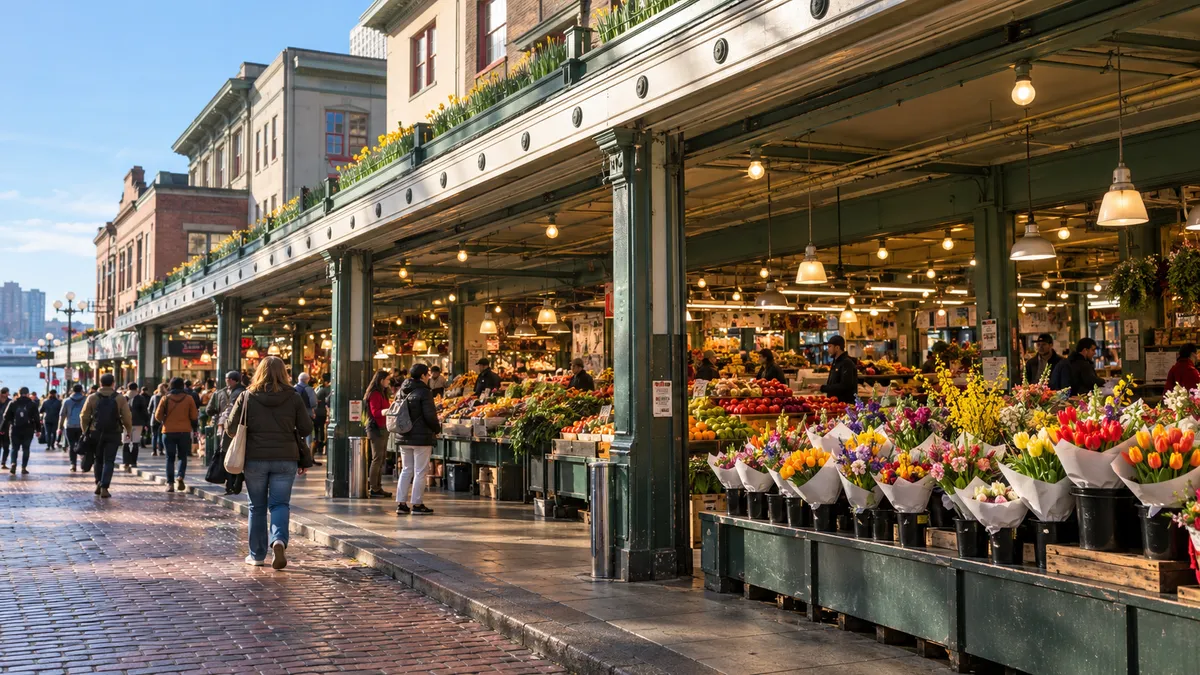
Conditions improved during late-2024 enforcement and cleanup pushes, but those gains tend to push activity onto adjacent blocks rather than erase it. Commuter hours feel easier thanks to foot traffic and downtown ambassadors. Late evening and overnight, when storefronts are shuttered, is when lingering here makes little sense.
Further south, 3rd Avenue around James and Yesler is a major transit interchange beside social services and the courthouse. It carries public-safety concerns plus a real pedestrian-collision problem. SPD chose 3rd and James for a neighborhood-resource officer program in 2026. Daytime is busy; after offices and courts close, it thins out fast.
Little Saigon along Jackson Street
Around 12th Ave S, S Jackson and S King, especially Jackson between 10th and 12th, is a hotspot for open drug activity and disputes. In November 2024, six stabbing incidents occurred over 38 hours, concentrated south and west of 12th and Jackson. Reporting indicated many victims were unhoused people, not random tourists.
That matters, but it doesn't make the whole Chinatown–International District off limits. The busy core around Hing Hay Park, Maynard Avenue, Uwajimaya and King Street Station, mainly west of I-5, is excellent for food and sightseeing by day. The concern is walking east along Jackson late, when shops close and the street empties.
Pioneer Square after the clubs close
Pioneer Square's historic core is lovely by day and early evening. The trouble is concentrated around nightlife closing, on S Washington Street, Occidental Ave S near S Jackson, and club exits around 1st and 2nd Ave S.
In May 2025, a shooting after 1 a.m. on S Washington killed three people and critically injured another. The window to respect is roughly midnight to 3 a.m. as clubs empty. Stadium events flip the dynamic, adding crowds and more eyes on the street. Leave with the main crowd and request rides from a lit hotel or business entrance.
Capitol Hill's Pike/Pine core at bar time
Capitol Hill is Seattle's most vibrant nightlife district and the heart of its LGBTQ+ scene. It is not a no-go area. Still, repeated 2024–25 shootings happened within a few blocks of Broadway and Pike, 10th–11th at Pike/Pine, Harvard Market and the west edge of Cal Anderson Park along Nagle Place. Broadway and Pike also concentrate petty crime and drug use.
Days and evenings are busy and fine. The concern is late night: sidewalk arguments at closing, parking lots, and people standing outside waiting for cars. Wait inside until your ride arrives. If you want something calmer, north Broadway, 15th Ave E, Madison Valley, Fremont, Ballard or Lower Queen Anne offer quieter bars with less edge.
Aurora Avenue North and its motel strip
Aurora Avenue N between roughly N 85th and 145th is an ongoing SPD focus for trafficking, prostitution, drugs, weapons, overdoses and motel-related violence. The Oaktree Motel at 8900 Aurora Ave N was declared a chronic nuisance in 2025.
It is also a fast, hostile road for pedestrians, especially from evening to early morning. The trap here is booking a cheap roadside motel because the listing says "North Seattle." Greenwood away from Aurora, Green Lake, Fremont, Ballard or the University District near UW are far better northern bases.
SODO's industrial blocks and late-night Rainier Beach
In SODO, Dakota Street and the isolated blocks around SODO and Lander stations carry risk mainly through isolation and property crime, not random daytime violence. Workday and stadium crowds make it feel normal; warehouse streets late at night or before dawn are another matter. Use Link directly and rideshare to Georgetown rather than walking through.
Rainier Beach has had serious late-night incidents, including a double homicide at 9232 Rainier Ave S around 3:30 a.m. in March 2025. By March 11, the area had logged five shooting incidents. A drive-by also injured two bystanders at Be'er Sheva Park on the 8700 block of Seward Park Ave S around 7 p.m. Normal daytime neighborhood life is different from after-hours lounges, lots and closed parks, and Rainier Valley as a whole shouldn't be written off. For visitors, Columbia City's compact restaurant strip is the easier destination.
Where, when and what to watch for at a glance
| Micro-area | When it matters most | What the risk actually looks like |
|---|---|---|
| 3rd Ave, Pike to Virginia | Late evening and overnight; calmer at commuter peaks | Open drug market, stolen-goods trading, crowding, occasional weapons |
| 3rd Ave at James/Yesler | After offices and courts close | Transit-hub disorder, isolation, pedestrian collisions |
| Jackson St, 10th–12th (Little Saigon) | Visible by day; worse after shops close | Drug activity and disputes, mostly not aimed at tourists |
| Pioneer Square nightlife blocks | Midnight to 3 a.m. | Club-exit fights and shootings |
| Capitol Hill Pike/Pine core | Bar closing | Sidewalk arguments, parking-lot incidents, petty theft |
| Aurora Ave N, N 85th–145th | Evening to early morning | Motel-linked crime, trafficking, dangerous traffic |
| SODO industrial streets | Late night and pre-dawn | Isolation and car break-ins |
| Rainier Beach hotspots | After hours, closed parks and lots | Late-night shootings, not daytime street life |
Which is the most dangerous neighborhood in Seattle?
For a typical visitor, the most consistently concerning hotspot is the stretch of 3rd Avenue around Pike and Pine. It sits between Pike Place Market, Westlake Center and major hotels, so tourists pass through it constantly, and it has hosted the city's most visible open-air drug market for years. It is a corridor, not a whole neighborhood, and this is a traveler-relevance judgment rather than a per-capita ranking.
Walk one block west to 1st Avenue or east to 4th and the atmosphere changes noticeably. That is the point about the worst neighborhoods in Seattle: the risk drops off sharply within blocks, and "downtown" as a whole is busy, useful and mostly fine during the day.
If you're asking where the most serious violence happens, the honest answer shifts with the hour. Pioneer Square and Capitol Hill at closing time, Aurora's motel strip overnight and late-night Rainier Beach produce the gravest incidents in the data, but you only intersect with them if you're out in those places at those hours.
Citywide crime at a glance
How Seattle compares as a whole
Official FBI figures for the entire city, not a single neighborhood: offenses per 100,000 residents in 2025, reported by the Seattle Police Department. Crime is concentrated in a few areas, so most of the city sits well below these averages.
Violent crime
706 per 100k
2.1× the US rate
-7% since 2021
Murder, rape, robbery and aggravated assault · 5,587 offenses in 2025
Property crime
4,461 per 100k
2.9× the US rate
-14% since 2021
Burglary, theft, vehicle theft and arson · 35,309 offenses in 2025
Source: FBI Crime Data Explorer. Dashed line: US average. Police jurisdiction may not match city limits exactly. How we use this data
Car break-ins are the crime you're most likely to meet
If something goes wrong on a Seattle trip, it will most likely be a smashed car window. SPD counted 7,890 vehicle prowls in 2025, even after a 7% decline. Rental cars with luggage visible are prime targets, from trailheads to downtown garages.
A single cable or empty bag on the seat can be enough to get a window broken, so the rule is a visibly empty passenger compartment, every time. Thieves look for any hint of something worth grabbing, and they work fast.
It's also worth separating this from the visible drug use downtown. Watching someone use on a sidewalk is unsettling, but the measurable threat to your trip is far more likely to be property crime than an assault by a stranger in crisis.
How to keep your rental off the prowl list
- Leave the cabin completely empty and uninteresting, including chargers, coats, bags and sunglasses.
- Put luggage in the trunk before you reach your destination, never while parked where people can watch.
- Choose attended or access-controlled garages and confirm the gate actually closes behind you.
- Avoid overnight street parking in SODO and quiet downtown blocks when a hotel garage is available.
- Don't leave a car loaded at a trailhead or viewpoint; stop at your hotel first and unload.
Staying sharp in Seattle after dark
Nights here are generally lively and manageable. The pattern to respect is simple: risk climbs as bars and clubs empty, and in places that go dead once businesses close.
In Pioneer Square and on Capitol Hill, the hour between 1 and 2 a.m. is when arguments spill onto sidewalks. Finish your night a little early or wait inside for your ride rather than standing on the curb.
Seattle's hills make short-looking routes deceptive. At night, a longer walk along streets with open businesses and foot traffic beats a shortcut through dark blocks or an empty park.
For the last mile from Pioneer Square, SODO, Little Saigon or Rainier Beach, late-night rideshare is reasonable. Always verify the driver, plate and car in the app before getting in.
Getting around and getting help
Link light rail and King County Metro remain practical ways to see the city. In 2025, 64% of Metro customers said they were somewhat or very satisfied with nighttime bus safety, the best result since early 2020, and Metro said drug complaints fell by a third in 2024.
Sound Transit changed how it reports incidents, so simple year-to-year assault comparisons aren't reliable. What riders actually encounter is smoking or drug use, harassment and unpredictable behavior, rather than organized targeting of tourists.
On platforms, wait near other riders, lights, cameras or emergency intercoms, and ride near the operator's end. If someone bothers you, change cars or exit at a busy station.
- Call or text 911 for any emergency: robbery, sexual assault, an active threat, serious crime, a medical or mental-health crisis, or someone unconscious or not breathing. Seattle supports text-to-911.
- Use SPD non-emergency at 206-625-5011 for reports that don't need an immediate response.
- Reach Sound Transit security at 206-398-5268, call or text, 24/7, for problems on Link or at stations.
- Save your hotel address offline in case your battery or signal dies.
Seattle is also earthquake country. If shaking starts, Drop, Cover and Hold On, then follow AlertSeattle and official instructions, especially if you're on the waterfront.
Top 7 habits that keep visitors out of trouble
These Seattle safety tips cover the situations visitors actually run into, ranked by how often they make a difference.
- Keep your car cabin empty, because vehicle prowls are the top risk for most travelers.
- Walk 1st, 2nd, 4th or 5th Avenue instead of lingering on 3rd downtown.
- Leave Pioneer Square and Capitol Hill with the crowd or before closing.
- Stick to the International District's busy core west of I-5 at night.
- Skip cheap motels on Aurora, however good the price looks online.
- Decline high-pressure street donations and never hand over your phone.
- Give distressed people space, and never photograph or confront them.
Quick do's and don'ts
- Do use Link and populated stations like Westlake and Pioneer Square.
- Do wait indoors for rideshares late at night.
- Don't cut through industrial SODO on foot after dark.
- Don't trust unknown QR stickers on meters or signs.
- Don't accept unsolicited "help" at parking meters or ticket machines.
Where to base yourself for a calmer stay
Choosing the right base does more for your peace of mind than any other decision. Each of these areas has a different trade-off between calm and convenience.
- Lower Queen Anne and Uptown sit around Seattle Center, with hotels, restaurants and events, and feel quieter than the downtown nightlife core.
- South Lake Union offers modern hotels and good access, though office blocks go quiet late, so stick to main streets.
- Upper Queen Anne is calm and residential, but hilly and less convenient late at night.
- The Pike Place and waterfront side of downtown works well if your hotel is near 1st Avenue rather than directly on 3rd.
- The University District near UW is active and connected by light rail, with ordinary student-area theft precautions.
- Fremont and Ballard have real neighborhood charm and good nightlife, with slower trips downtown.
Belltown is convenient and fun, but it's nightlife-heavy and not the quietest choice if calm is your priority.
Advice for women traveling solo
Solo female travelers generally find Seattle comfortable, especially in the neighborhoods above. The main adjustments are about timing and late-night logistics rather than avoiding the city.
On transit at night, sit near the operator and other riders. If someone's attention feels wrong, move cars or get off at a busy station, and text Sound Transit security at 206-398-5268 if needed.
For nights out on Capitol Hill or in Pioneer Square, arrange your ride before leaving the bar and wait inside until it arrives. Share your trip status with someone you trust.
Anatomy of the street fundraising scam
A current scam in Seattle targets visitors near shopping areas. A group, often young and friendly, approaches claiming to raise money for a youth sports team or music program.
They push for a small donation, then produce a card reader or a QR code. The amount entered can be far higher than agreed, and victims have been charged hundreds of dollars before noticing.
A common move is asking to "help" by holding your phone to complete the payment. Once they have an unlocked device or your card, you've lost control of the transaction.
The fix is simple: say no and keep walking. If you want to support a cause, donate later through an organization you can verify, and check your card statement if you've already paid.
Common questions about staying safe in Seattle
These are the questions visitors ask most often before and during a trip.
Is Seattle safe for tourists right now?
Yes, for the most part. Homicides fell 36% in 2025 and most major crime categories declined. The risks visitors face are concentrated on specific corridors and late-night hours, plus car break-ins.
Is it safe to walk around downtown Seattle?
During the day, generally yes. The stretch of 3rd Avenue around Pike and Pine is the part to avoid lingering on, especially at night. 1st Avenue, the market and the waterfront are much more comfortable.
Is the light rail safe at night?
It's practical and widely used. Expect occasional drug use or erratic behavior, so ride near the operator and other riders, and use Sound Transit security at 206-398-5268 if something happens.
Should I avoid the Chinatown-International District?
No. The core around Hing Hay Park, Maynard Avenue and Uwajimaya is great for food and sightseeing. Just avoid walking east along Jackson toward 12th late at night.
Seattle rewards the prepared visitor
Seattle's problems are visible, and there's no point pretending otherwise. But visible disorder and actual danger are different things, and most trouble here follows predictable places and hours.
Avoid lingering on 3rd Avenue downtown, leave the nightlife districts before closing chaos, skip the Aurora motels and keep your car empty. Do that and you'll likely remember the ferries, the market and the food, not a bad encounter.
Enjoy the city, trust your instincts on the street, and have a great time in Seattle.
This guide is general safety information, not a guarantee of safety. Conditions change; check local news and official sources before you go. In an emergency, call 911.
Nearby city guides
More city guides in Washington
 Bellevue
 Everett
 Federal Way
 Kent
 Renton
 Spokane
 Spokane Valley
 Tacoma