
Dangerous Neighborhoods in Burlington
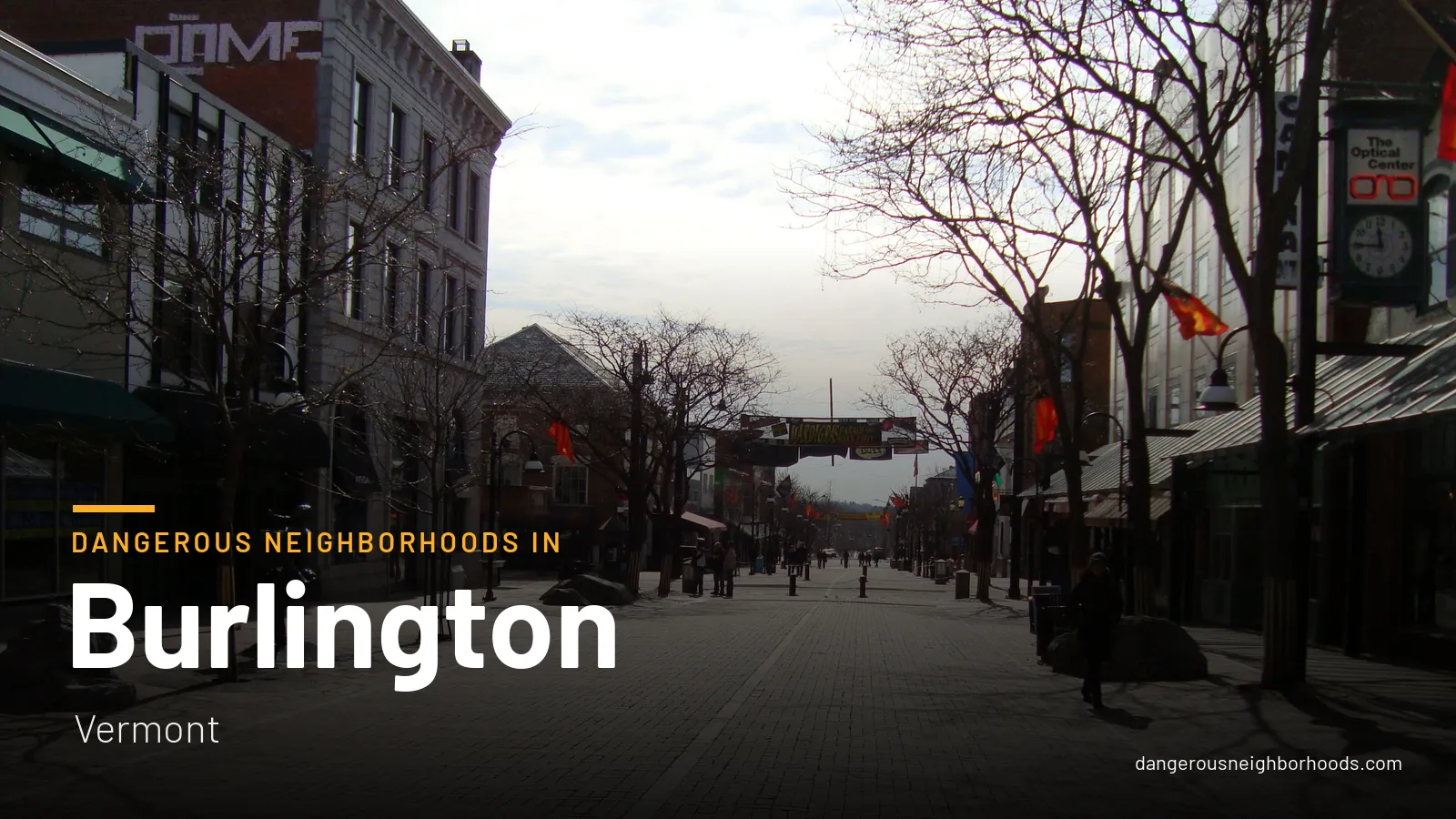
Burlington, Vermont, is generally a manageable city for visitors, but its reputation for being a peaceful New England destination hides some genuine public safety problems. The areas requiring the most attention are Downtown Burlington and the Old North End, particularly around certain streets, parks and nightlife spots. However, calling entire neighborhoods dangerous would be misleading.
The latest available police incident data, covering September 2025 through August 2026, identifies Downtown as the city's main concentration of violent incidents, with the Old North End also standing out. Property crime is another concern, especially vehicle break-ins and theft. Understanding where incidents actually concentrate is much more useful than relying on generalized warnings about Burlington.
So, is Burlington safe for tourists? Generally, yes. It is not a city where visitors need to avoid walking around altogether, but there are specific places worth approaching cautiously, especially late at night. Here is a neighborhood-by-neighborhood breakdown based on available police records and local reporting.
Why Burlington has developed a more complicated safety situation
Burlington is Vermont's largest city, but it is still relatively small, with approximately 44,000 residents. Its university population, tourism, commercial activity and nightlife bring together different groups of people in a compact downtown area. That concentration makes certain public spaces more exposed to theft, assaults and disorder.
The city has also experienced difficulties associated with substance abuse, homelessness, mental health crises and drug distribution. These issues became particularly visible around downtown, where businesses and residents raised concerns about public drug use, disturbances and the general atmosphere of some streets.
A social problem that goes beyond ordinary street crime
One important distinction is that not every police incident represents a criminal offense. Burlington's police records include different types of encounters, and emergency responses can involve medical emergencies, welfare checks and behavioral health situations.
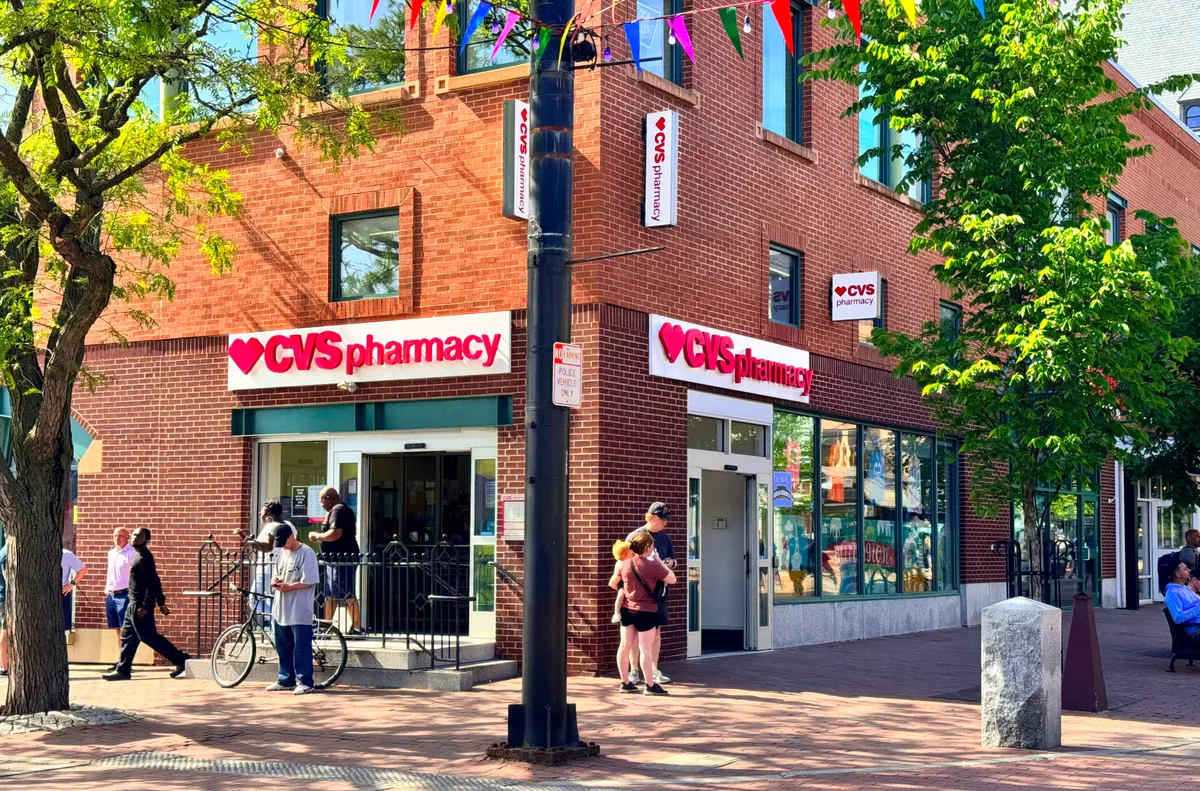
The city has responded with increased police foot patrols, community support teams and additional outreach services. In February 2026, municipal authorities reported that violent incidents in 2025 had fallen to their lowest level since 2021. The situation is improving in some respects, although that does not mean every neighborhood has become equally safe.
Sources include the official Burlington Police Department data portal and the city's 2025 public safety update.
The neighborhoods and streets that deserve the most caution in Burlington
There is no official municipal ranking of the worst neighborhoods in Burlington. Nevertheless, police incident records provide a useful picture of where violent and property crime are concentrated. The following areas deserve particular attention, although risk varies considerably from street to street.
Where to take extra care
Circles show approximate areas, not exact borders. Tap a zone for details.
1. Downtown Burlington
Downtown is the clearest high-priority area when looking at reported violent incidents. The police dataset recorded 116 violent incidents here during the 12 months ending August 2026, representing approximately 47% of the city's total in that category.
The concentration of bars, restaurants, shops, entertainment venues and pedestrian traffic creates opportunities for theft and confrontations. The busiest parts of downtown can become particularly unpredictable around closing time, when alcohol consumption and late-night activity increase.
Pay particular attention to Church Street Marketplace, City Hall Park and the surrounding streets. These are important public spaces, not places that tourists should automatically avoid. However, public safety concerns involving drug activity, theft and disturbances have been documented in this part of the city.
South Winooski Avenue, Church Street and Main Street also appear prominently in the police incident figures. That makes the central commercial area one of the most relevant places to examine when researching bad areas in Burlington.
There has been an increase in police foot patrols, particularly around Church Street and City Hall Park. The city says this has contributed to improving conditions.
The busiest part of downtown can feel completely different after the bars close. Keep your phone away and know where you're going.
2. Old North End
The Old North End, commonly known as ONE, is another neighborhood that deserves attention. It recorded 53 violent incidents in the same 12-month period, making it the second-largest concentration in Burlington.
Located north of downtown, this is one of the city's oldest and most densely populated residential districts. It has a diverse community, independent businesses, restaurants and a mix of older residential buildings.
The concern is not that the entire neighborhood is dangerous. Rather, certain streets and intersections experience more incidents involving assaults, theft and public disturbances. North Street and surrounding corridors are worth researching before choosing accommodation.
Visitors unfamiliar with Burlington should avoid assuming that every residential street has the same atmosphere. Some blocks are perfectly ordinary, while others can feel less comfortable after dark.
The Old North End is also close enough to downtown that walking between the two areas is common. During the day, this is generally an ordinary urban walk, but late at night it is sensible to stick to well-lit streets.
3. South End
The South End is often associated with Burlington's creative scene, breweries, independent businesses, galleries and industrial heritage. It is not generally considered one of the city's most dangerous residential neighborhoods, but its property crime figures deserve attention.
During the 12-month period examined, the South End recorded 402 property crime incidents, approximately 26% of the city's total in the dataset. However, that number requires context because a substantial proportion came from a concentrated commercial location on Shelburne Street.
In fact, one Shelburne Street location accounted for 224 of the city's 446 recorded retail theft incidents. This means that commercial activity heavily influences the neighborhood's figures.
For visitors, the practical concern is primarily vehicle theft and break-ins, particularly when parking near busy commercial premises. The artistic district around Pine Street remains a popular place to explore, and there is no reason to treat the entire South End as a no-go area.
4. University Hill and the UVM area
The University Hill area, around the University of Vermont (UVM), has a different safety profile. Its student population, rental housing, university facilities and nightlife create a steady flow of people throughout the academic year.
Police records registered 27 violent incidents and 251 property crime incidents in this area during the period examined. Property crime is the more prominent concern, with theft and incidents involving buildings and vehicles deserving particular attention.
Students and visitors should be especially careful with bicycles, laptops and personal belongings. Leaving valuables unattended in public spaces or visible inside a parked vehicle is an unnecessary risk.
The university surroundings are not inherently dangerous, and the presence of students and university services means many streets remain active. Nevertheless, quieter residential stretches can feel isolated late at night.
5. Shelburne Street commercial corridor
Although it is not a separate residential neighborhood, Shelburne Street deserves its own mention because of its unusual concentration of reported property crime.
As mentioned earlier, a single commercial location accounted for half of Burlington's retail theft reports in the examined period. This is a useful reminder that high incident counts do not always indicate dangerous residential streets.
For travelers, the sensible approach is to secure rental cars, avoid leaving luggage visible and pay attention when walking through busy parking areas.
A quick comparison of Burlington's higher-activity areas
| Area | Recorded incidents | Main concern |
|---|---|---|
| Downtown | 116 violent | Assaults, robbery and nightlife-related incidents |
| Old North End | 53 violent | Assaults and street-level disturbances |
| South End | 402 property | Retail theft and vehicle-related crime |
| University Hill | 27 violent / 251 property | Theft and property crime |
| Shelburne Street corridor | 224 retail thefts at one location | Commercial theft |
Figures cover September 1, 2025, through August 31, 2026. The categories are not directly interchangeable, and the figures represent police-recorded incidents rather than the probability that an individual visitor will become a victim. Source: Burlington crime data analysis.
Which is the most dangerous neighborhood in Burlington?
Downtown Burlington is the strongest candidate based on the available police figures, with 116 recorded violent incidents between September 2025 and August 2026. That represents almost half of all incidents classified as violent in the city's dataset.
The main concern is the combination of nightlife, commercial activity and concentrated public disturbances. Church Street Marketplace, City Hall Park and the surrounding streets are particularly relevant when assessing the area's public safety conditions.
However, Downtown Burlington is also the city's main visitor destination. Restaurants, hotels, shops and cultural attractions are concentrated here. Avoiding it completely would mean missing much of what makes Burlington worth visiting. The better strategy is to remain aware of your surroundings, especially after midnight.
Citywide crime at a glance
How Burlington compares as a whole
Official FBI figures for the entire city, not a single neighborhood: offenses per 100,000 residents in 2025, reported by the Burlington Police Department. Crime is concentrated in a few areas, so most of the city sits well below these averages.
Violent crime
483 per 100k
1.5× the US rate
+35% since 2021
Murder, rape, robbery and aggravated assault · 214 offenses in 2025
Property crime
4,103 per 100k
2.6× the US rate
+15% since 2021
Burglary, theft, vehicle theft and arson · 1,820 offenses in 2025
Source: FBI Crime Data Explorer. Dashed line: US average. Police jurisdiction may not match city limits exactly. How we use this data
The public drug activity problem in Burlington
One of the most visible public safety challenges in Burlington has been open drug activity, particularly in and around downtown public spaces.
The issue is connected to broader problems involving substance use, overdoses, homelessness and access to support services. It is important not to confuse someone experiencing homelessness or a medical crisis with a criminal threat. Nevertheless, public drug distribution and unpredictable confrontations can create uncomfortable situations for residents and visitors.
City Hall Park and the surrounding downtown streets have received particular attention from local authorities. Burlington has increased foot patrols and developed additional intervention services to address these problems.
How to handle an uncomfortable street situation
If you encounter an argument, apparent drug transaction or someone behaving unpredictably, do not get involved. Avoid staring, filming or making unnecessary comments.
- Keep a reasonable distance from confrontations.
- Choose another street if a public space feels uncomfortable.
- Do not touch discarded needles or other potentially hazardous objects.
- Move into an open business if you need assistance.
- Call 911 if someone is in immediate danger or requires emergency medical attention.
There is no advantage in trying to investigate a situation yourself. Distance and awareness are generally the best responses.
Getting around Burlington after dark
Burlington is relatively compact, and many central attractions can be reached on foot. However, the experience of walking through the city changes considerably depending on the time, weather and street you choose.
Late-night incidents are concentrated around nightlife periods, with police data showing particularly busy hours around 11 p.m., midnight and 2–3 a.m. Friday and Saturday are also the busiest days for violent incidents.
Do not confuse a busy street with a safe street. A crowded bar district can be perfectly manageable, but arguments and alcohol-related confrontations become more likely as establishments close.
Most people come here expecting a quiet Vermont town. It usually is, but weekends downtown are a different story.
Safer neighborhoods in Burlington for visitors
Fortunately, Burlington has several residential areas that offer a quieter atmosphere than its busiest commercial districts. The police figures suggest that the New North End is particularly worth considering for travelers prioritizing a more residential environment.
New North End
The New North End recorded just eight violent incidents and 81 property crime incidents in the examined 12-month dataset, the lowest figures among the main neighborhood groupings.
It is a more suburban part of Burlington, with residential streets, larger properties, parks and shopping facilities. Its quieter residential character makes it an interesting option for families and visitors who do not need to stay in the downtown core.
The main disadvantage is convenience. You will generally need a car, taxi or other transport to reach the main downtown attractions.
Hill Section
The Hill Section is another residential option worth investigating. It has a quieter atmosphere, attractive houses and tree-lined streets, with a location that offers reasonable access to the university and downtown.
It is particularly appealing for visitors who want a predominantly residential environment rather than accommodation in the middle of the nightlife district.
Five Sisters and residential South End
Five Sisters is a residential area within the South End, known for its historic houses and quieter neighborhood atmosphere.
Although the wider South End has significant property crime figures, the commercial incidents around Shelburne Street should not be interpreted as evidence that every residential block has the same risk.
For accommodation, the specific street matters more than the general neighborhood label.
How to contact emergency services and move around safely
Knowing the local emergency numbers and basic transport options can make a significant difference when visiting Burlington.
- EmergencyEmergency services: Dial 911 for police, fire or medical emergencies.
- EmergencyPolice non-emergency: Call 802-658-2700 for non-urgent police assistance.
- MedicalMedical emergencies: Call 911 if someone is seriously injured or experiencing a life-threatening condition.
- Getting aroundPublic transport: Check Green Mountain Transit's routes and schedules before travelling.
- Getting aroundLate-night transport: Use a licensed taxi or established ride-hailing service rather than walking through unfamiliar streets.
- Getting aroundNavigation: Keep your phone charged and plan your route before leaving your accommodation.
For official contact details, consult the Burlington emergency and crisis support page.
Practical safety advice for exploring Burlington
You do not need to behave as if you were visiting a high-crime metropolis. However, a few precautions will help you avoid the most common problems.
Top 8 precautions worth following
- Keep valuables out of sight when walking through busy streets or commercial areas.
- Never leave luggage, electronics or shopping bags visible inside a parked car.
- Use well-lit streets when returning to your accommodation at night.
- Avoid unnecessary confrontations around bars, parks and nightlife areas.
- Do not leave bicycles unattended without a proper security lock.
- Be particularly alert around bar closing times on Friday and Saturday nights.
- Check your accommodation's immediate surroundings rather than relying exclusively on neighborhood descriptions.
- Keep your phone charged and have a backup way to contact emergency services.
Do's and don'ts when exploring the city
Do
- Explore during daylight when visiting unfamiliar residential streets.
- Use established transport when returning late at night.
- Keep your belongings secure in crowded commercial areas.
Don't
- Do not display expensive electronics unnecessarily.
- Avoid approaching people involved in heated confrontations.
- Never leave your rental car unlocked or with valuables inside.
- Do not assume that an empty street is automatically a safe shortcut.
Is Burlington safe at night?
Burlington is generally manageable at night, but downtown requires more awareness than its quieter residential districts.
Church Street and the surrounding entertainment area remain popular after dark. Restaurants, bars and public venues attract visitors, and many people walk around without experiencing any problems.
The situation can change around closing time, particularly on weekends. Alcohol-related arguments, theft and other disturbances are more likely around busy nightlife locations. The Old North End also deserves additional caution when walking through unfamiliar streets late at night.
For a quieter evening, consider dining in a residential area, arranging transport back to your hotel and avoiding unnecessary detours through unfamiliar parts of downtown.
What solo female travelers should know about Burlington
Burlington is not generally regarded as a city where women travelling alone need to avoid public spaces. However, the usual precautions are important, especially when returning from bars or restaurants late at night.
Choose accommodation with good lighting and convenient access to transport. If you are staying outside the central area, plan your return journey before going out.
Be cautious about accepting drinks from strangers, keep your belongings close and avoid isolated waterfront or park areas after dark when there are few other people around.
There is also an important statistical limitation. Burlington's publicly available police dataset reports sexual offenses separately from its violent-crime category, and their locations are not published in a way that identifies individual streets. Therefore, the neighborhood rankings above should not be interpreted as a complete assessment of personal safety for women.
How a typical vehicle break-in happens in Burlington
One of the most relevant risks for travelers is theft from parked vehicles. During the examined 12-month period, police recorded 494 thefts from motor vehicles, making this the largest individual property-crime category.
A common opportunity-based scenario involves a vehicle parked near a commercial area, shopping destination or tourist attraction with luggage, bags or electronics visible inside.
- The opportunity appears: Someone notices a bag, backpack or electronic device through a vehicle window.
- The vehicle is assessed: An unlocked door or easily accessible window provides an opportunity for theft.
- The theft takes place: The offender takes the visible belongings and leaves, sometimes in a matter of seconds.
- The owner discovers the problem: The traveler returns to find missing property, damaged glass or a vehicle that has been entered.
This is an illustrative scenario, not a claim that every reported vehicle theft follows the same pattern. The important lesson is simple: never leave valuables visible, even when parking for a short time.
Frequently asked questions about Burlington safety
These answers address the most common concerns about visiting Burlington, choosing accommodation and exploring the city.
Is Burlington, Vermont, safe for tourists?
Yes. Burlington is generally manageable for tourists, and most visitors can explore its main attractions without problems. However, Downtown and the Old North End have higher concentrations of reported violent incidents, so normal urban precautions are advisable.
What is the most dangerous neighborhood in Burlington?
Downtown Burlington is the strongest candidate according to the latest neighborhood-level figures available, with 116 recorded violent incidents between September 2025 and August 2026. The Old North End ranks second, with 53 incidents.
Which neighborhoods are safest in Burlington?
The New North End is particularly worth considering, with eight violent incidents and 81 property crime incidents in the examined period. The Hill Section and quieter residential parts of Five Sisters are also attractive options for visitors seeking a calmer atmosphere.
Is it safe to walk around Burlington at night?
Generally, yes, particularly in active and well-lit areas. However, late-night downtown streets deserve additional caution, especially around bar closing times on weekends. Use established transport if you are unfamiliar with the route back to your accommodation.
Knowing Burlington beyond its safety headlines
Burlington remains an appealing destination, with Lake Champlain, Church Street Marketplace, independent restaurants, breweries and access to some of Vermont's most beautiful natural scenery. Its public safety challenges are real, but they should not overshadow everything the city offers.
The key is understanding the difference between concentrated urban problems and everyday neighborhood life. Downtown and the Old North End deserve greater attention, while the New North End offers a quieter residential alternative. The South End and University Hill require a more nuanced assessment, particularly when considering property crime.
If you are visiting, choose your accommodation carefully, secure your belongings and use common sense after dark. Burlington is a city to explore with awareness, not a destination that needs to be approached with fear.
This guide is general safety information, not a guarantee of safety. Conditions change; check local news and official sources before you go. In an emergency, call 911.